

The United Nations Office at Geneva
Multimedia Newsroom
Press Conferences , Edited News | UNAIDS
UNAIDS - Press Conference: Launch of World AIDS Day Report 2024
Respect for everyone's human rights is essential to ending HIV, says UNAIDS
Despite huge progress, the world is not yet on track to end AIDS as a public health threat, the UN agency said on Tuesday. Of the 39.9 million people living with HIV, 9.3 million people are still not accessing life-saving treatment. Last year, 630 000 people died of AIDS-related illnesses, and 1.3 million people around the world newly acquired HIV. In at least 28 countries, the number of new HIV infections is on the rise. To bring down the trajectory of the pandemic, it is imperative that lifesaving programmes can be reached without fear by all who need them.
When girls are denied education; when there is impunity for gender-based violence; when people can be arrested for who they are, or who they love; when a visit to health services is dangerous for people because of the community they are from—the result is that people are blocked from being able to access HIV services that are essential to save their lives and to end the AIDS pandemic. To protect everyone’s health, we need to protect everyone’s rights.
Science continues to innovate against AIDS. Long-acting medicines that only need to be injected a few times a year could tip the scales but only if a human rights approach is taken to share the technology to bring down prices and enable production in every part of the world.
UNAIDS new report brings together the latest research, case studies, and recommendations for getting the world on track. It includes guest essays by Elton John, by Archbishop of Cape Town Thabo Makgoba, by Irish President Michael D. Higgins, by United Nations High Commissioner for Human Rights Volker Türk, and by former President of the International AIDS Society Adeeba Kamarulzaman amongst others. It provides a clear roadmap: Take the rights path to end AIDS.
Source: UNTV CH
Restrictions: NONE
Language: English/French/NATS
Dateline: 27 November 2024 Geneva, Switzerland
TRT: 3:06
Speakers:
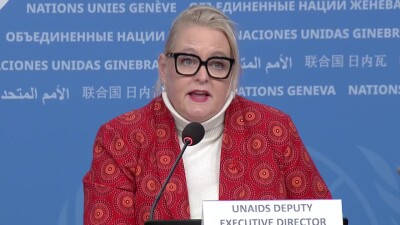
- Christine Stegling, Deputy Executive Director, UNAIDS
- Axel Bautista, Community Engagement Manager, MPact, Mexico City
- Alexandra Calmy, Head of HIV Services, Geneva University Hospitals, Switzerland
- Jeanne Gapiya-Niyonzima, Chair of the National Association for Support for HIV+ people living with AIDS, Burundi
- Berthilde Gahongayire, Regional Director, West and Central Africa region, UNAIDS
SHOTLIST
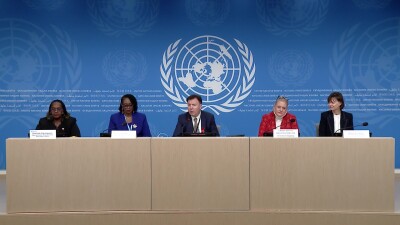
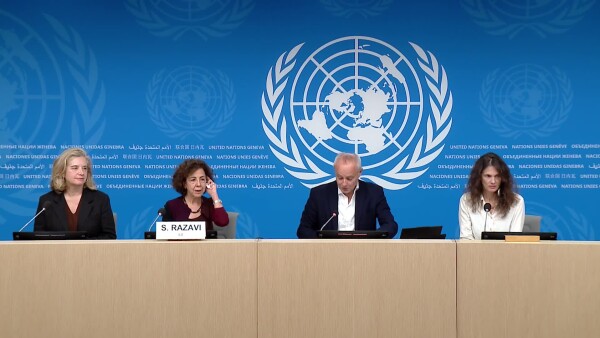
- Wide UN Geneva Press Room with panellists
- Moderator (wearing red ribbon) speaking with panellists
- Christine Stegling holding up report
- SOT (English) -- Christine Stegling, Deputy Executive Director of UNAIDS
- “We have come so far in the HIV response. Progress has been driven by biomedical advances, and advances in the protection of human rights and by community activism but big gaps remain in the protection of human rights and these gaps are keeping the world from getting on the path that ends AIDS.”
- CU Photographer, Medium-wide press room, two photographers
- SOT (French) Alexandra Calmy, Head of HIV Services, Geneva University Hospitals, Switzerland “L’année 2024 a été marquée par une véritable révolution dans le domaine de la prévention du VIH. Je pèse mes mots : une révolution, comparable à celle que nous avons connue en 1996 avec l’avènement des trithérapies. Des études ont en effet démontré que deux injections annuelles (lenacapavir) permettent de protéger presque entièrement une population de jeunes femmes particulièrement à risque d’acquisition du VIH en Afrique subsaharienne. Cette avancée est remarquable dans un domaine où aucun vaccin n’est actuellement disponible, et où aucun vaccin ne semble prêt à l’être dans les cinq prochaines années. Cette révolution dans la prévention mérite d’être saluée et accompagnée, afin qu’elle soit rendue accessible et disponible dans les meilleurs délais pour les populations concernées.” English translation: “The year 2024 has been marked by a true revolution in HIV prevention. I weigh my words carefully: a revolution, comparable to the breakthrough of combination therapies in 1996. Indeed, studies have shown that two annual injections (lenacapavir) can almost completely protect a population of young women at high risk of acquiring HIV in sub-Saharan Africa. This advancement is remarkable in a field where no vaccine is currently available and none is expected to be ready in the next five years. This revolution in prevention deserves to be celebrated and supported so that it can be made accessible and available as quickly as possible to vulnerable populations.”
- Wide Panellists with Alexandra Calmy in monitors
- Axel Bautista, Community Engagement Manager, MPact, Mexico City (English) “In 63 countries same sexual relations are criminalized. People living with HIV continue to be criminalized. Criminalization exacerbates fear, persecution, hate, violence and discrimination and it has a negative impact on public health. Queer people are left vulnerable, at increased risk, feeling isolated and excluded. Criminalization means more people will be in danger and more lives will end. We cannot end HIV unless we end criminalization.”
- Axel finishing and leaving podium
- Jeanne Gapiya-Niyonzima, Chair of the National Association for Support for HIV+ people living with AIDS, Burundi (French) “Lorsque Guy Bertrand, mon bébé, a été (en 1986), diagnostiqué séropositif, le médecin l’a chassé de l’hôpital pour aller mourir à la maison. Il fallait qu’il libère la place pour d’autres enfants qui pouvaient être sauvés. Plus tard un autre médecin, sans mon consentement, m’a enlevé l’utérus ... j’ai eu l’impression qu’on m’a volé ma féminité à l'âge tendre de 25 ans. On peut terminer, on peut en finir avec le VIH mais la voie royale pour y arriver ça sera la voie des droits.” English translation: “When my baby, Guy Bertrand was diagnosed with HIV (in 1986), the doctor chased him away from the hospital to die at home. He wanted to free up space to make room for other kids who could be treated. Aftewards another doctor took out my uterus at the tender age of 25. I felt robbed of my femininity. We can end AIDS, finish it but there is only one way and this is by respecting human rights.” Editor’s note: In 1986, there was no HIV treatment thus a person born or living with HIV had no way to live a long and healthy life. Currently, when an HIV+ woman takes her antiretroviral medicine, she can give birth to an HIV- baby (she will not transmit the virus during pregnancy, or breastfeeding.)
- Wide panellists, Moderator thanking Jeanne
- Wide press conference room
Respect for everyone's human rights is essential to ending HIV, says UNAIDS
Despite huge progress, the world is not yet on track to end AIDS as a public health threat, the UN agency said on Tuesday. Of the 39.9 million people living with HIV, 9.3 million people are still not accessing life-saving treatment. Last year, 630 000 people died of AIDS-related illnesses, and 1.3 million people around the world newly acquired HIV. In at least 28 countries, the number of new HIV infections is on the rise. To bring down the trajectory of the pandemic, it is imperative that lifesaving programmes can be reached without fear by all who need them.
When girls are denied education; when there is impunity for gender-based violence; when people can be arrested for who they are, or who they love; when a visit to health services is dangerous for people because of the community they are from—the result is that people are blocked from being able to access HIV services that are essential to save their lives and to end the AIDS pandemic. To protect everyone’s health, we need to protect everyone’s rights.
Science continues to innovate against AIDS. Long-acting medicines that only need to be injected a few times a year could tip the scales but only if a human rights approach is taken to share the technology to bring down prices and enable production in every part of the world.
UNAIDS new report brings together the latest research, case studies, and recommendations for getting the world on track. It includes guest essays by Elton John, by Archbishop of Cape Town Thabo Makgoba, by Irish President Michael D. Higgins, by United Nations High Commissioner for Human Rights Volker Türk, and by former President of the International AIDS Society Adeeba Kamarulzaman amongst others. It provides a clear roadmap: Take the rights path to end AIDS.
Similar Stories

1
1
1
Press Conferences | UNEP , ITU , UNICEF , UNHCR , OHCHR , IOM , WHO , UNECE
UNEP: Update on the first Global Framework on Chemicals Conference, ITU: 2026 Plenipotentiary Conference in Doha, UNICEF: Drones and drought worsen the crisis for children in Sudan, UNHCR: Nigerians flee violence, OHCHR attacks against press freedom in Egypt, IOM Ebola prevention and surveillance, WHO Ebola prevention and surveillance, UNECE UN Water Conference

1
1
1
Edited News | OHCHR , UNOG
UN Human Rights on Tuesday called on Egypt to end the persecution, harassment and intimidation of independent journalists and media outlets, and to respect press freedom.

1
1
2
Edited News | UNICEF
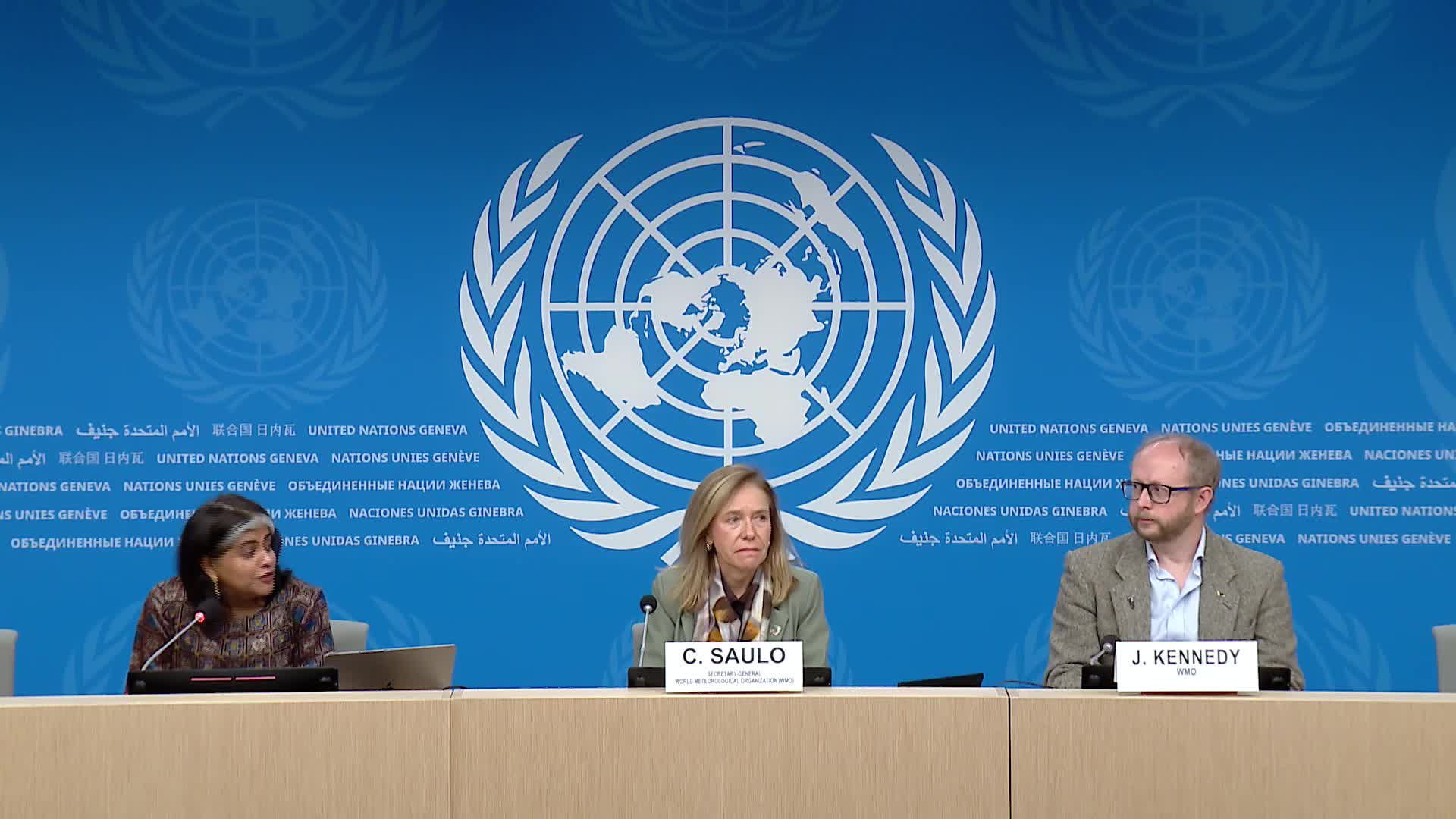
Drones and drought are "closing in" on Sudan, the UN Children's Fund, UNICEF, said on Tuesday, describing unprecedented attacks on the country's infrastructure including by drones travelling up to 1,500 kilometres before hitting their target.
"It is an assault unlike anything Sudan has seen before. In the last week of October, not a single day passed without a drone strike on a power station in Sudan. Up to 15 were hit in the month of October,” said agency spokesperson James Elder.
1
1
1
Press Conferences | WMO
Speakers:
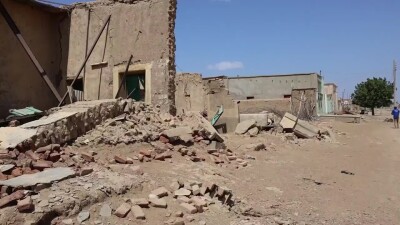
- Celeste Saulo, WMO Secretary-General
- John Kennedy, WMO Head of Climate Information
1
1
1
Edited News | IOM , UNHCR
Aid teams working to help millions of people uprooted by the ongoing war in Sudan appealed on Friday for more international assistance amid desperate funding shortages, empty warehouses and overwhelming needs.
1
1
1
Press Conferences | UNHCR , IOM , UNICEF , WHO
UNHCR / IOM: Millions at risk of losing emergency shelter as funding runs out; UNHCR: warns of severe climate risks facing displaced people ahead of COP31, UNICEF: children in Ukraine face major water supply disruptions amid attacks on energy infrastructure; WHO: together for science and health.

1
1
1
Edited News | UNICEF
Ukraine has sustained almost 2,000 attacks on education since the full-scale Russian invasion in 2022, with some 270 this year alone, the UN Children’s Fund (UNICEF) said on Tuesday.
1
1
1
Press Conferences | ILO , ITU , UNFPA , UNICEF , WHO
UNICEF: Education Cannot Wait (ECW) High-Level Replenishment Conference - mobilising funding for education for children affected by crises; Children in Ukraine have two-thirds of school hours disrupted by daily air-raid alarms. UNFPA: Yemen: conditions for women and girls in the besieged city of Taizz and in IDP camps; the status of maternal health facilities/services in Taizz City and in other conflict-affected areas. ILO: “Women in Business and Management report: Scaling Success". ITU: Facts and Figures 2026 report on global digital connectivity. WMO and International Ski and Snowboard Federation new guide on weather and climate services for ski resorts; WMO State of Climate Update at COP31
1
1
1
Edited News | UNHCR
More than 280,000 people have now been displaced by fighting in Yemen and many vulnerable people are unable to access lifesaving relief because it is too dangerous to do so, the UN refugee agency (UNHCR) said on Friday.
1
1
1
Press Conferences | OCHA , UN , UNHCR
UN Joint Inspection Unit: JIU at 60 - Who Holds the UN System Accountable? From Recommendations to Results – How Independent System-wide Oversight Contributes to Change; UNHCR: UNHCR winter appeal: 9m people urgently need winter aid as resources dwindle and temperatures slide; Refugees in Yemen trapped between conflict, displacement and dangerous journeys

1
1
1
Edited News | UN
Tour guides at UN Geneva turned heads at the Palace of Nations on Thursday as they unveiled stylish new uniforms, designed in partnership with leading Italian sustainable fashion designers and manufacturers.
1
1
1
Press Conferences | WMO , UNHCR , WHO , ILO
WMO: Greenhouse Gas Bulletin; UNHCR: As attacks intensify UNHCR urges support for war ravaged Ukrainians; WHO: Clinical trials in DRC: vaccines and beyond; ILO: New global and regional estimates on domestic work, informality and working conditions