

The United Nations Office at Geneva
Multimedia Newsroom
Edited News , Press Conferences , Images | General Assembly , UNITED NATIONS
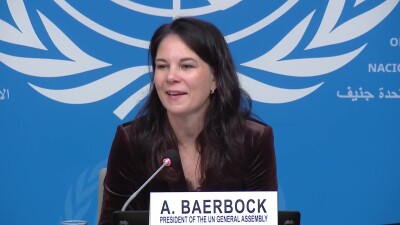
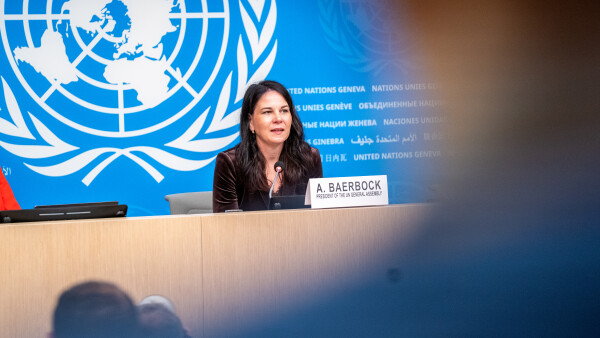
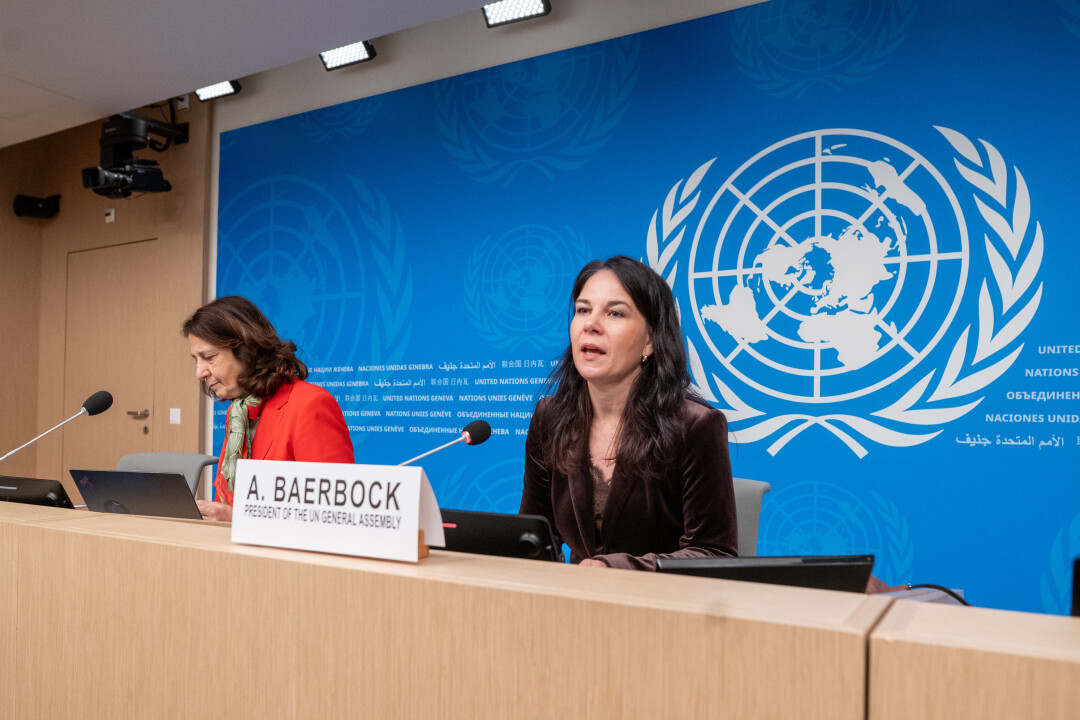
Annalena Baerbock (President of the General Assembly) - Geneva Press Briefing
Russia’s invasion of Ukraine ended an era, says UN General Assembly President
The full-scale invasion of Ukraine by Russian troops on 24 February 2022 shattered the peaceful aspirations of an entire continent, but war must never be the new normal, UN General Assembly President Annalena Baerbock said on Tuesday.
In a wide-ranging press conference taking in the UN’s perilous financial situation, the chances of the next Secretary-General being a woman along with challenges and priorities for the global body at a time of spiking geopolitical tensions, the head of the General Assembly insisted on the need to protect the rights of everyone “everywhere, every day”.
“Four years ago, people in Europe woke up in another world because generations like mine have always had the privilege to live a life in peace,” Ms. Baerbock told journalists in Geneva. “But this changed four years ago with the full invasion [by] Russia, of the neighbouring country of Ukraine.”
Marking four years to the day since Russian tanks headed for Kyiv, the senior UN official condemned the ongoing deadly conflict that has killed thousands, including civilians unable to reach bomb shelters in time.
“They told me count till 40 and if you're still alive you obviously made it because with the rockets being shot over the border there is no time in many places to find a safer place,” Ms. Baerbock told journalists in Geneva, recounting the testimony of a teenage girl she met while visiting Kharkiv, 40 kilometres (25 miles) from the Russian border.
The principle of protecting human rights and addressing suffering everywhere around applies as much to Geneva and New York as it does “in Gaza and the Occupied Palestinian Territory, in Ukraine, Sudan and Myanmar and so many other places around the world”, she insisted. “Unfortunately, some of these crises do not even make it to the news at all.”
Human rights of men and women remain “fundamental to the UN” and are “not new demands” just as much as they are “not optional”, Ms. Baerbock continued. “There have been women’s rights as human rights from the beginning, it says ‘all human [beings]’, not all men.”
Asked whether it seemed less likely that a woman might be elected as the next UN Secretary-General as the election process draws nearer, the General Assembly President highlighted that the body’s entire membership of 193 countries last year issued a collective call “to strongly encourage nomination of women”.
Despite this unanimous position, “the closer the decision comes, then suddenly it's being forgotten that …half of the population are indeed women”, she continued. Citing her personal experience of “realpolitik” when running for different positions, Ms. Baerbock recounted being asked: ‘Are you not too young? Are you not too old?’ This kind of discrimination is heard “way more for women than for men”, she insisted.
Once Secretary-General António Guterres’s second and final term in office ends on 31 December, the new UN chief will most likely have to continue to grapple with the Organization’s crippling funding crisis running into the billions of dollars, in large part caused by the increasing late payments of dues - or partial or even non-payment - by Member States.
“Every Member State has to pay its contribution in full and in time. And [$]160 million are obviously not in full,” Ms. Baerbock said, in response to a question about whether the UN is still heading for financial collapse.
“I would like to underline that this is not simple figures and numbers, this is about people dying. If we have to cut humanitarian aid by 20 per cent, if we have withdrawal, especially from the World Health Organization but and also less funding of the World Food Organization, this means literally that especially infants are dying - because the special nutrition for infants, for children, is what the UN is mainly delivering in places of crisis. And if we cut 20 per cent of this delivery, 20 per cent of infants won't survive.”
ends
UN General Assembly President Annalena Baerbock
TRT: 3 min 02s
SOURCE: UNTV CH
RESTRICTIONS: NONE
LANGUAGE: ENGLISH / NATS
ASPECT RATIO: 16:9
DATELINE: 24 FEBRUARY 2025 GENEVA, SWITZERLAND
Speaker:
- Annalena Baerbock, President of the UN General Assembly
SHOTLIST
- Exterior wide, UN Geneva flag alley.
- Wide, podium shot.
- SOUNDBITE (English) – Annalena Baerbock, President of the UN General Assembly: “Four years ago, people in Europe woke up in another world because generations like mine have always had the privilege to live a life in peace. But this changed four years ago with the full invasion of Russia, of the neighbouring country of Ukraine.”
- Wide, Annalena Baerbock, President of the UN General Assembly speaking to journalists.
- SOUNDBITE (English) – Annalena Baerbock, President of the UN General Assembly: “I urge Member States to uphold human rights not only here in Geneva or New York, but also at the national level; in Gaza and the Occupied Palestinian Territory, in Ukraine, Sudan and Myanmar and so many other places around the world, everywhere, every day.”
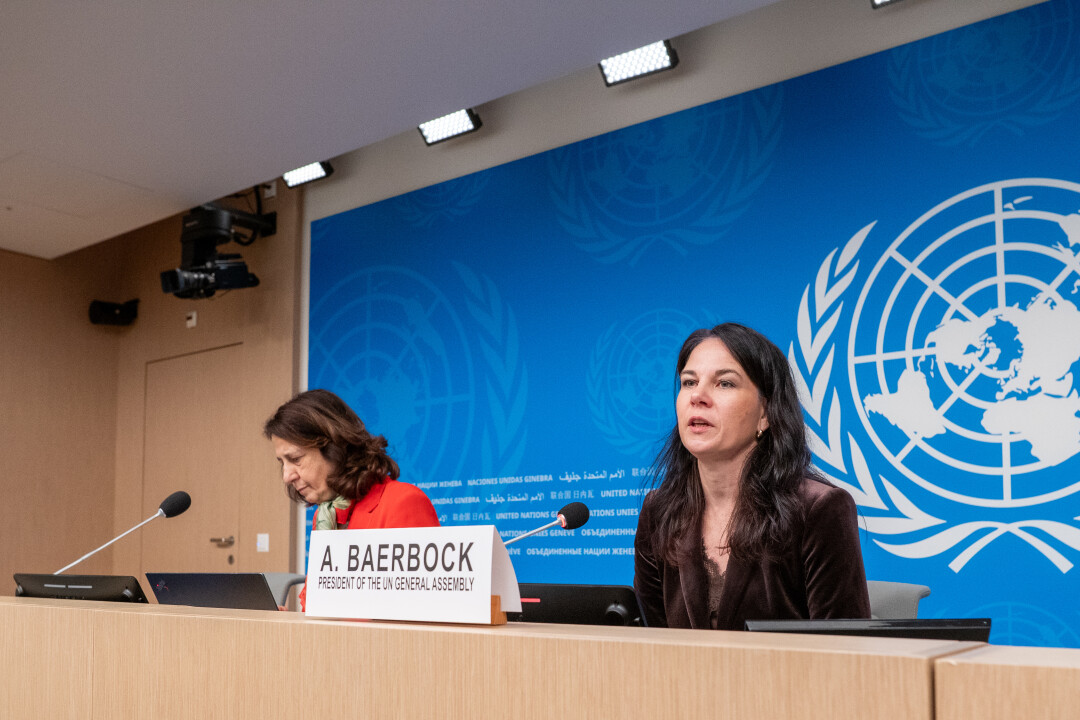
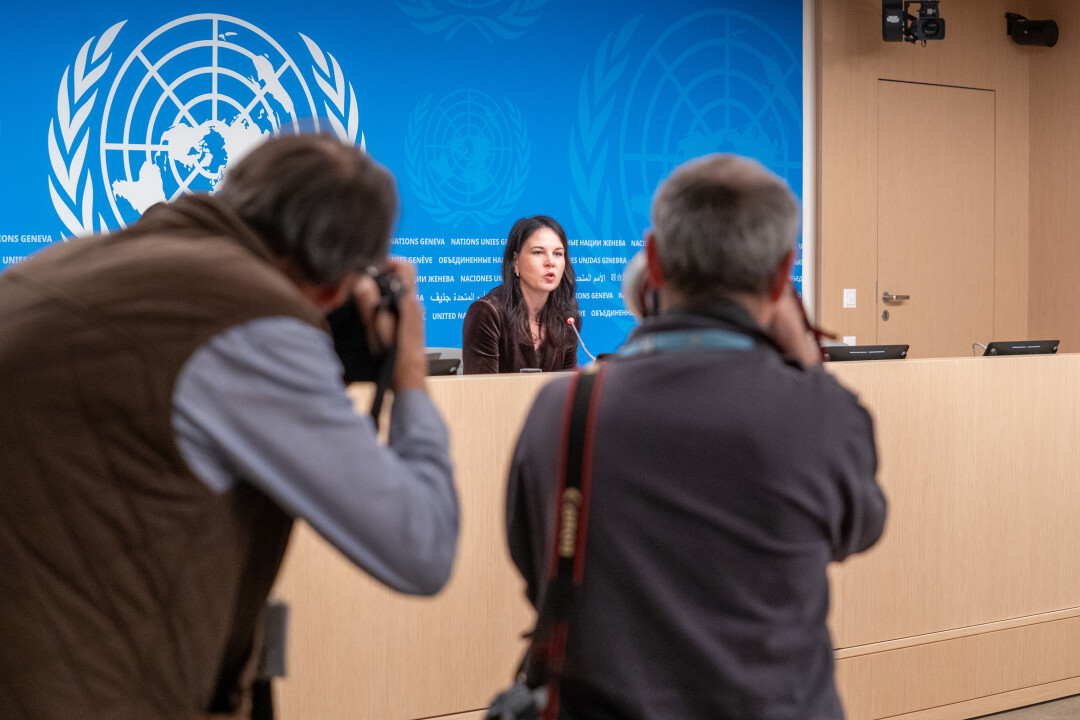
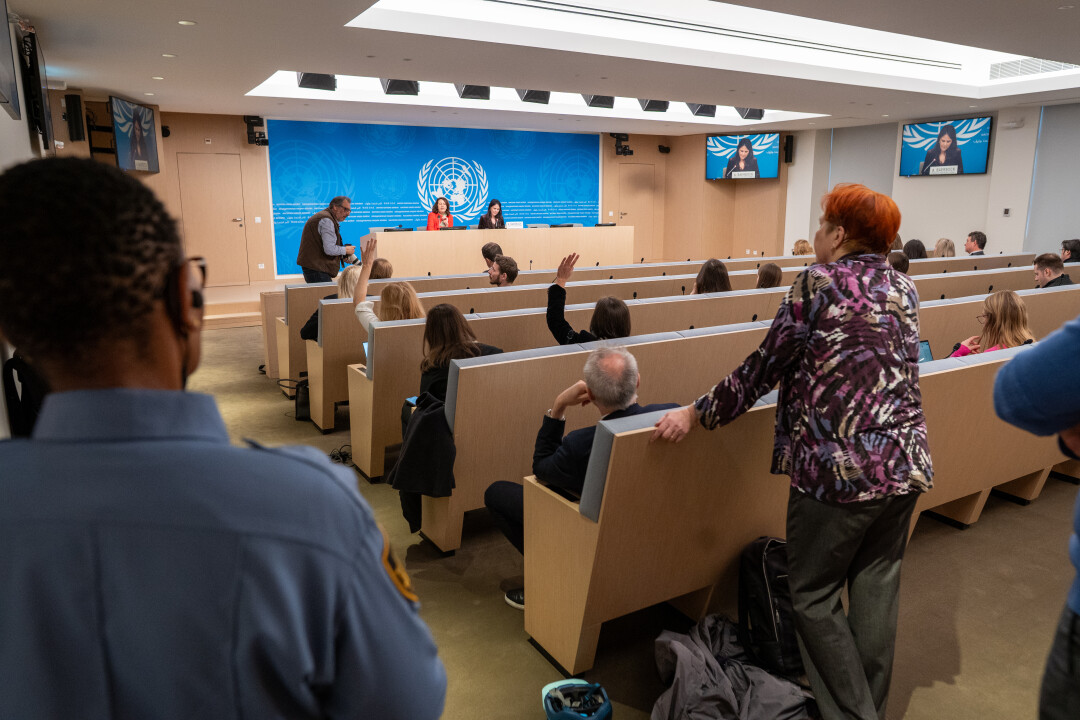
- Wide, Annalena Baerbock, President of the UN General Assembly addressing room, photographers, journalists.
- SOUNDBITE (English) – Annalena Baerbock, President of the UN General Assembly: “Human rights are fundamental to the UN; not new demands, not optional. As we are celebrating also the 80th year of the General Assembly and very soon of the Universal Declaration of Human Rights, there have been women’s rights as human rights from the beginning, all; it says all humans, not all men.”
- Wide, Annalena Baerbock, President of the UN General Assembly addressing room.
- SOUNDBITE (English) – Annalena Baerbock, President of the UN General Assembly: “193 Member States agreed last year in the resolution on revitalization that they called all together to strongly encourage nomination of women.”
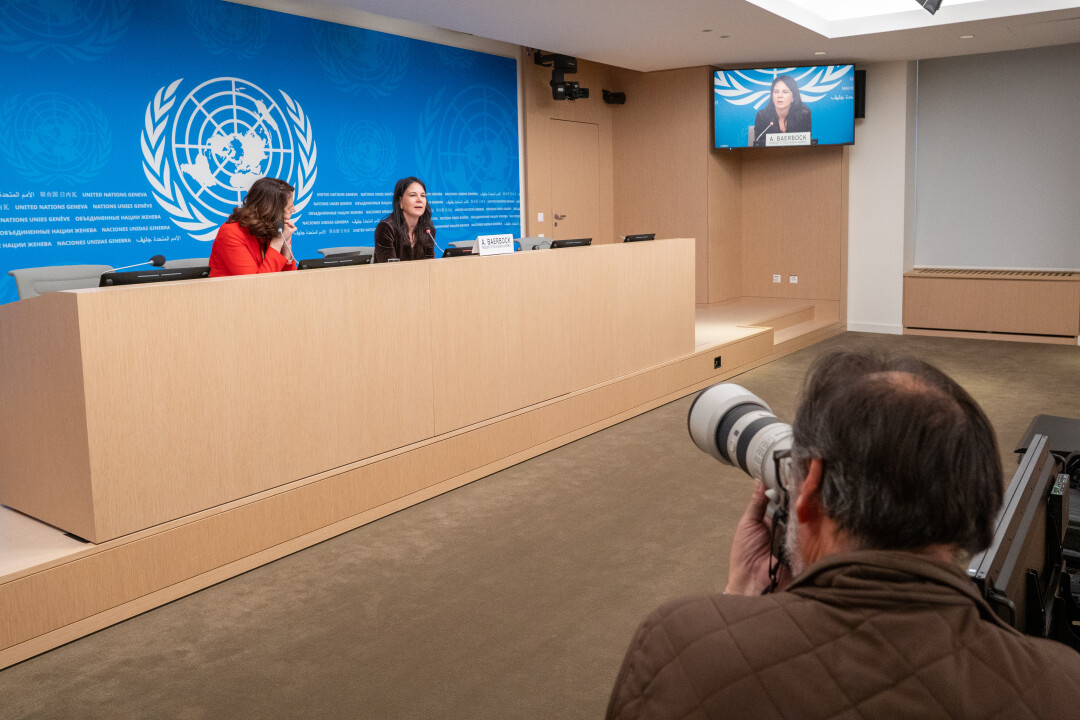
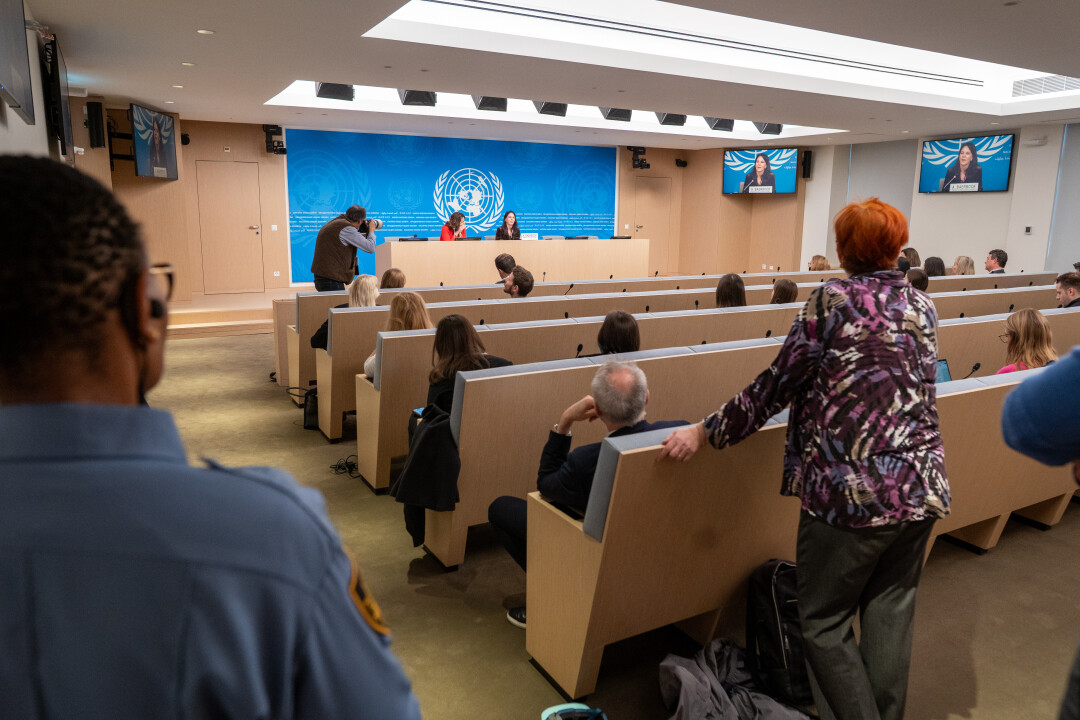
- Wide, photographer taking shot beneath TV screen showing Ms. Baerbock.
- SOUNDBITE (English) – Annalena Baerbock, President of the UN General Assembly: “Sometimes there are strong calls, but the closer the decision comes, then suddenly it's being forgotten that not only there has been a poll, but that half of the population are indeed women.”
- Medium-wide, Annalena Baerbock, President of the UN General Assembly addressing room from podium.
- SOUNDBITE (English) – Annalena Baerbock, President of the UN General Assembly: “In my case, when I was running for different positions, ‘Are you not too young? Others are now rising, well, are you not too old?’ And interestingly enough, these questions are being heard way more for women than for men.”
- Medium-wide, TV screen showing Ms. Baerbock, journalists.
- SOUNDBITE (English) – Annalena Baerbock, President of the UN General Assembly: “Every Member State has to pay its contribution in full and in time. And [$] 160 million are obviously not in full.”
- Medium, photographer taking shot in front of TV screen showing Ms. Baerbock.
- SOUNDBITE (English) – Annalena Baerbock, President of the UN General Assembly: “I would like to underline that this is not simple figures and numbers, this is about people dying. If we have to cut humanitarian aid by 20 per cent, if we have withdrawal, especially from the World Health Organization but and also less funding of the World Food Organization, this means literally that especially infants are dying.”
- Wide, journalists.
- Wide, journalists, photographer.
- Medium, journalist.
Similar Stories

1
1
1
Press Conferences | UNEP , ITU , UNICEF , UNHCR , OHCHR , IOM , WHO , UNECE
UNEP: Update on the first Global Framework on Chemicals Conference, ITU: 2026 Plenipotentiary Conference in Doha, UNICEF: Drones and drought worsen the crisis for children in Sudan, UNHCR: Nigerians flee violence, OHCHR attacks against press freedom in Egypt, IOM Ebola prevention and surveillance, WHO Ebola prevention and surveillance, UNECE UN Water Conference

1
1
1
Edited News | OHCHR , UNOG
UN Human Rights on Tuesday called on Egypt to end the persecution, harassment and intimidation of independent journalists and media outlets, and to respect press freedom.

1
1
2
Edited News | UNICEF
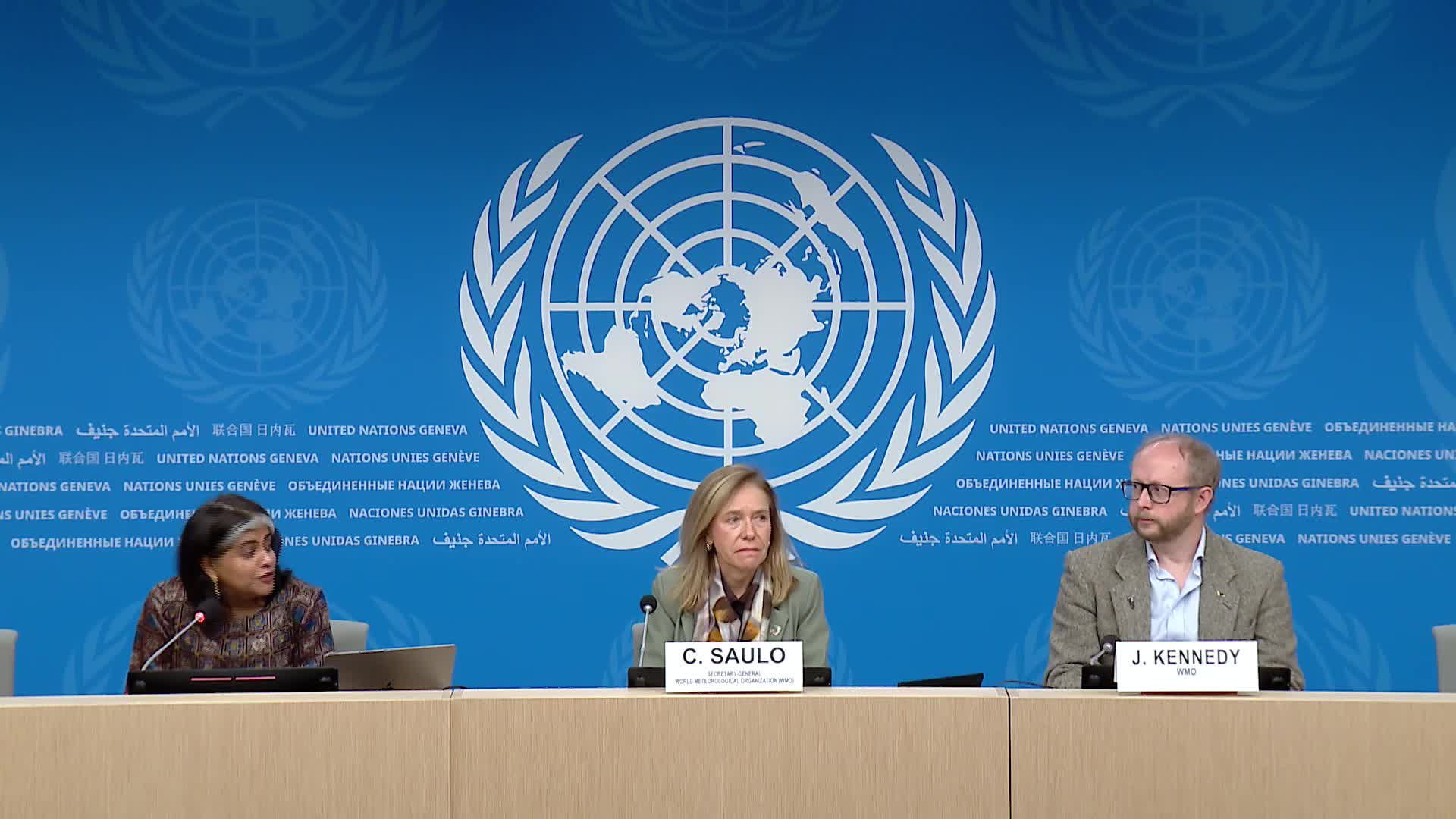
Drones and drought are "closing in" on Sudan, the UN Children's Fund, UNICEF, said on Tuesday, describing unprecedented attacks on the country's infrastructure including by drones travelling up to 1,500 kilometres before hitting their target.
"It is an assault unlike anything Sudan has seen before. In the last week of October, not a single day passed without a drone strike on a power station in Sudan. Up to 15 were hit in the month of October,” said agency spokesperson James Elder.
1
1
1
Press Conferences | WMO
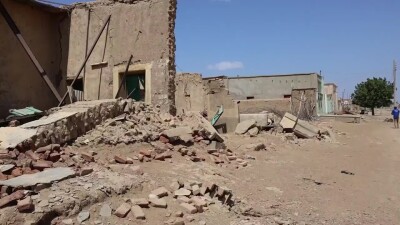
Speakers:
- Celeste Saulo, WMO Secretary-General
- John Kennedy, WMO Head of Climate Information
1
1
1
Edited News | IOM , UNHCR
Aid teams working to help millions of people uprooted by the ongoing war in Sudan appealed on Friday for more international assistance amid desperate funding shortages, empty warehouses and overwhelming needs.
1
1
1
Press Conferences | UNHCR , IOM , UNICEF , WHO
UNHCR / IOM: Millions at risk of losing emergency shelter as funding runs out; UNHCR: warns of severe climate risks facing displaced people ahead of COP31, UNICEF: children in Ukraine face major water supply disruptions amid attacks on energy infrastructure; WHO: together for science and health.
1
1
1
Edited News | UNICEF
Ukraine has sustained almost 2,000 attacks on education since the full-scale Russian invasion in 2022, with some 270 this year alone, the UN Children’s Fund (UNICEF) said on Tuesday.
1
1
1
Press Conferences | ILO , ITU , UNFPA , UNICEF , WHO
UNICEF: Education Cannot Wait (ECW) High-Level Replenishment Conference - mobilising funding for education for children affected by crises; Children in Ukraine have two-thirds of school hours disrupted by daily air-raid alarms. UNFPA: Yemen: conditions for women and girls in the besieged city of Taizz and in IDP camps; the status of maternal health facilities/services in Taizz City and in other conflict-affected areas. ILO: “Women in Business and Management report: Scaling Success". ITU: Facts and Figures 2026 report on global digital connectivity. WMO and International Ski and Snowboard Federation new guide on weather and climate services for ski resorts; WMO State of Climate Update at COP31
1
1
1
Edited News | UNHCR
More than 280,000 people have now been displaced by fighting in Yemen and many vulnerable people are unable to access lifesaving relief because it is too dangerous to do so, the UN refugee agency (UNHCR) said on Friday.
1
1
1
Press Conferences | OCHA , UN , UNHCR
UN Joint Inspection Unit: JIU at 60 - Who Holds the UN System Accountable? From Recommendations to Results – How Independent System-wide Oversight Contributes to Change; UNHCR: UNHCR winter appeal: 9m people urgently need winter aid as resources dwindle and temperatures slide; Refugees in Yemen trapped between conflict, displacement and dangerous journeys
1
1
1
Edited News | UN
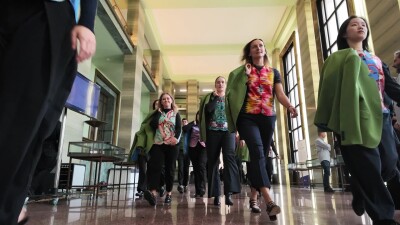
Tour guides at UN Geneva turned heads at the Palace of Nations on Thursday as they unveiled stylish new uniforms, designed in partnership with leading Italian sustainable fashion designers and manufacturers.
1
1
1
Press Conferences | WMO , UNHCR , WHO , ILO
WMO: Greenhouse Gas Bulletin; UNHCR: As attacks intensify UNHCR urges support for war ravaged Ukrainians; WHO: Clinical trials in DRC: vaccines and beyond; ILO: New global and regional estimates on domestic work, informality and working conditions