

The United Nations Office at Geneva
Multimedia Newsroom
Monkeypox outbreak can still be contained, insists UN health agency
The monkeypox outbreak that has been reported in 16 countries and several regions of the world can still be contained and the overall risk of transmission is low, the UN health agency said on Tuesday.
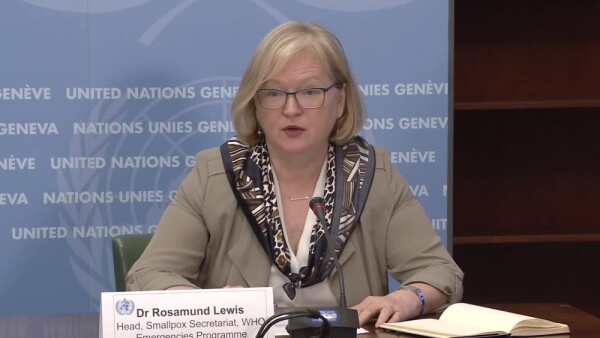
“What we know from this virus and these modes of transmission, this outbreak can still be contained, it is the objective of the World Health Organization and Member States to contain this outbreak and to stop it,” said Dr Rosamund Lewis, Head, Smallpox Secretariat, WHO Emergencies Programme.
“The risk to the general public therefore appears to be low, because we know that the main modes of transmission have been as described in the past.”
Latest data from WHO’s Member States to 22 May indicates more than “250 cases of confirmed and suspected cases of monkeypox from 16 countries and several WHO regions”.
Symptoms can be very similar to those experienced by smallpox patients, although they are less clinically severe, albeit visually dramatic, with raised pustules and fever that can last from two to four weeks.
According to WHO, this monkeypox outbreak has been transmitted primarily by close skin-to-skin contact, although the virus can also be passed by breath droplets and contaminated bedding. The incubation period of monkeypox is usually from six to 13 days but can range from five to 21 days. “We don’t yet have the information as to whether this would be transmitted through body fluids,” Dr Lewis noted, before urging potentially at-risk groups to “be mindful” when in close contact with others.
In an effort to warn against stigmatising those who fall sick from the virus, the UN health agency insisted that although most cases of infection have been linked primarily to men who have sex with men, this is probably because they are more proactive in seeking healthcare advice than others.
The disease “can affect anyone and (it) is not associated with any particular group of people,” Dr Lewis told journalists in Geneva.
She stressed that what is unusual about this outbreak is that “countries that are reporting monkeypox now are countries that do not normally have outbreaks of monkeypox. There are several countries in which this disease is endemic: Central African Republic, Democratic Republic of the Congo, Nigeria and Cameroon are reporting cases at the moment and there are other countries that have reported cases in the past.”
Although vaccination against smallpox provided protection against monkeypox in the past, people younger than 40 to 50 years of age today may be more susceptible to monkeypox infection as smallpox vaccination campaigns ended globally after the disease was eradicated in 1980.
Although WHO Member States asked WHO to keep stocks of smallpox vaccine in case of a new outbreak of the disease, Dr Lewis explained that “it’s been 40 years and these stockpiles may need to be refreshed - they certainly need to be revisited - and WHO has been working on that and has been looking at that also now.”
There are two variants of monkeypox virus: West African and Congo Basin (Central African). The first human case was identified in a child in the Democratic Republic of the Congo in 1970 and although the name monkeypox originates from the discovery of the virus in monkeys in a Danish laboratory in 1958, it is a bit misleading, Dr Lewis explained.
“Most of animals that are susceptible to monkeypox are in fact rodents, Gambian giant pouched rats, dormice, prairie dogs; those are the types of animals from which there may be spillover - a zoonotic spillover - from animals into people who may be going into the forest, or who may be coming in contact with the virus from a zoonotic route.”
ends
STORY: Monkeypox - WHO
TRT: 1 min 50s
SOURCE: UNTV CH
RESTRICTIONS: NONE
LANGUAGE: ENGLISH / NATS
ASPECT RATIO: 16:9
DATELINE: 24 May 2022 GENEVA, SWITZERLAND
SHOTLIST
- Exterior medium shot, Palais des Nations flag alley, nations’ flags flying, a breezy day.
- Wide shot, podium with speakers in Press briefing room, Palais des Nations.
- SOUNDBITE (English) — Dr Rosamund Lewis, Head, Smallpox Secretariat, WHO Emergencies Programme: “So, what we know from this virus and these modes of transmission, this outbreak can still be contained, it is the objective of the World Health Organization and Member States to contain this outbreak and to stop it. The risk to the general public therefore appears to be low, because we know that the main modes of transmission have been as described in the past.”
- Medium shot, journalists, participants, side shot.
- SOUNDBITE (English) — Dr Rosamund Lewis, Head, Smallpox Secretariat, WHO Emergencies Programme: “As of 22 May we’ve had officially reported through all Member States – WHO Member States - over 250 cases of confirmed and suspected cases of monkeypox from 16 countries and several WHO regions.”
- Wide shot, journalists and participants sitting at table in front of laptops or taking notes.
- SOUNDBITE (English) — Dr Rosamund Lewis, Head, Smallpox Secretariat, WHO Emergencies Programme: “The countries that are reporting monkeypox now are countries that do not normally have outbreaks of monkeypox. There are several countries in which this disease is endemic: Central African Republic, Democratic Republic of the Congo, Nigeria and Cameroon are reporting cases at the moment and there are other countries that have reported cases in the past.”
- Medium shot, showing podium speaker checking mobile phone, looking out onto press room with journalists, TV camera and lighting panel.
- SOUNDBITE (English) — Dr Rosamund Lewis, Head, Smallpox Secretariat, WHO Emergencies Programme: “Most of animals that are susceptible to monkeypox are in fact rodents, Gambian giant pouched rats, dormice, prairie dogs those are the types of animals from which there may be spillover - a zoonotic spillover - from animals into people who may be going into the forest, or who may be coming in contact with the virus from a zoonotic route.”
- Close-up, hands typing on laptop keyboard.
- Medium shot, TV camera operator adjusting tripod.
- Medium shot, participants seated in front of laptops.
Similar Stories

1
1
1
Edited News | OHCHR , UNOG
UN Human Rights on Tuesday called on Egypt to end the persecution, harassment and intimidation of independent journalists and media outlets, and to respect press freedom.

1
1
2
Edited News | UNICEF
Drones and drought are "closing in" on Sudan, the UN Children's Fund, UNICEF, said on Tuesday, describing unprecedented attacks on the country's infrastructure including by drones travelling up to 1,500 kilometres before hitting their target.
"It is an assault unlike anything Sudan has seen before. In the last week of October, not a single day passed without a drone strike on a power station in Sudan. Up to 15 were hit in the month of October,” said agency spokesperson James Elder.
1
1
1
Edited News | IOM , UNHCR
Aid teams working to help millions of people uprooted by the ongoing war in Sudan appealed on Friday for more international assistance amid desperate funding shortages, empty warehouses and overwhelming needs.
1
1
1
Edited News | UNICEF
Ukraine has sustained almost 2,000 attacks on education since the full-scale Russian invasion in 2022, with some 270 this year alone, the UN Children’s Fund (UNICEF) said on Tuesday.
1
1
1
Edited News | UNHCR
More than 280,000 people have now been displaced by fighting in Yemen and many vulnerable people are unable to access lifesaving relief because it is too dangerous to do so, the UN refugee agency (UNHCR) said on Friday.
1
1
1
Edited News | UN
Tour guides at UN Geneva turned heads at the Palace of Nations on Thursday as they unveiled stylish new uniforms, designed in partnership with leading Italian sustainable fashion designers and manufacturers.
1
1
1
Edited News | OCHA , UNICEF , WFP
Aid agencies warned on Friday of the fast-developing humanitarian emergency inside Taiz City in Yemen, which has been encircled by de facto Houthi forces fighting government troops along the country’s west coast.
2
17
1
2
Edited News , Press Conferences , Images | OCHA , WMO
Two UN agencies teamed up on Wednesday to issue an appeal for immediate assistance to help communities already being impacted by the strongest El Niño on record.
3
16
2
2
Edited News , B-roll , Conferences , Images | UNITED NATIONS , UNOG
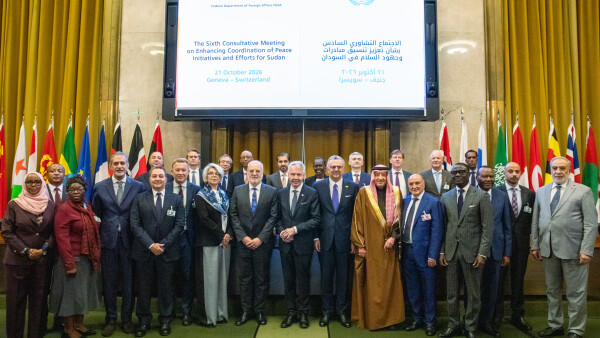
Sixth Consultative Meeting on Enhancing Coordination of Peace Initiatives and Efforts for Sudan
1
1
1
Edited News | UNICEF , WHO , UNHCR
Yemen war continues to force families from homes amid hunger and disease
More than 250,000 people have now fled renewed fighting in Yemen, the UN said on Tuesday, citing particular concern for those sheltering in the southwestern city of Taiz and the wider governorate, where access is “essentially blocked”.
1
1
1
Edited News | UNICEF
A little over one year since a ceasefire agreement was announced between Hamas fighters and Israel, more than 340 children have been reported killed and hundreds more injured, the UN Children’s Fund, UNICEF, said on Friday.
1
1
1
Edited News | UNICEF , IFRC
Six weeks after Nepal’s deadly flooding disaster, communities are still struggling to rebuild their lives, but they will need sustained help as global warming increases the risk of another Himalayan catastrophe, the UN Children’s Fund (UNICEF) said on Friday.