

The United Nations Office at Geneva
Multimedia Newsroom
Sri Lanka's misery should be warning to us all on global food, fuel and finance crisis: UNDP
Countries already under pressure from the economic fall-out of the COVID-19 pandemic risk seeing the same economic turmoil and human misery as Sri Lanka as the war in Ukraine drags on, unless the international community agrees to radical financial measures to help countries saddled with debt, the UN said on Thursday.
“We’re witnessing a tragic series of events that are unfolding in Sri Lanka right now that should be a warning to anyone who thinks that, you know, it is up to countries themselves to figure out how to deal with this crisis,” said Achim Steiner, Administrator of the UN Development Programme (UNDP), in reference to the South Asian nation’s debt default last month – the first in its history.
“That default essentially means the country is no longer able to pay - or not only service - its debt, but actually to import fundamental parts of what keeps an economy alive, whether it is petrol or it is diesel, whether it is fuel, whether it is medicines,” Mr. Steiner added.
The warning came as new data from the UN Food and Agriculture Organization (FAO) indicated that the number of people affected by hunger globally rose to 828 million in 2021, an increase of about 46 million since 2020, and 150 million since the outbreak of coronavirus.
Speaking at a virtual briefing at UN Geneva to flag a series of policy recommendations that countries could follow to withstand the global food, fuel and finance crisis, UNDP Senior Economist George Gray Molina noted that many countries had faced 36 months of “shock after shock after shock”: first COVID-19, then Russia’s invasion of Ukraine on 24 February, the latter in particular shaking global food and energy supplies and sparking an inflationary surge.
“With COVID, what we saw is effects that worked through labour markets, lockdowns, and income, that was slowly cumulative but had a strong impact over time,” said Mr Molina. “Official estimates are about 125 million people falling into poverty over about 18 months…what we found right now is that three months of inflation have drawn about 71 million people into poverty.”
Failure to take decisive and radical action by governments risked sparking widespread unrest, UNDP chief Steiner suggested.
“Very quickly, we might see also with the troubling economic outlook a situation where for many countries the patience and the ability of people to cope with this reality runs out. And as I’ve often said, when politics moves out of our parliaments, out of government, onto the streets, we are in a fundamentally different situation. We are very vulnerable at this moment to see these kinds of developments happen in many more countries.”
Outlining some of the finance policy recommendations that are detailed in the new UNDP report - Tackling The Cost-Of-Living Crisis: Policy Responses to Mitigate Poverty and Vulnerability around the World – Mr. Steiner insisted that it might be possible for some countries to tackle runaway inflation without resorting to the “blunt instrument” of raising interest rates.
“There is potential through the multilateral investment banks for example by paying in more capital, to allow them to provide through targeted lending and crisis-response measures,” he said, adding that the International Monetary Fund (IMF) could also be involved in this process.
There were “ways and means by which countries can address more specifically their needs”, the UNDP Administrator continued, that did “not necessarily have to be in contradiction to the inflationary pressure measures” now being put in place by central banks.
According to the UNDP report, the impact of the global food, fuel and finance crisis on global poverty has been “drastically faster” than the shock of the COVID-19 pandemic.
Analysis of 159 developing countries globally indicated that price spikes in key commodities were already having “immediate and devastating impacts on the poorest households.
Clear hotspots have emerged in the Balkans, the Caspian Sea region and Sub-Saharan Africa (in particular the Sahel region), according to UNDP.
This report also zooms in on the insights provided by the two briefs of the UN Secretary-General’s Global Crisis Response Group on the ripple effects of the war in Ukraine.
Key to the global recovery will be the recognition that it is in everyone’s interest to help countries that are grappling with depleted fiscal reserves and high levels of sovereign debt, as well as rising interest rates on global financial markets, Mr. Steiner insisted.
“Unprecedented price surges mean that for many people across the world, the food that they could afford yesterday is no longer attainable today,” says UNDP Administrator, Achim Steiner. “This cost-of-living crisis is tipping millions of people into poverty and even starvation at breathtaking speed and with that, the threat of increased social unrest grows by the day.”
Among the UNDP report’s strongest takeaways is the warning that “entire developing countries” risk decoupling from the global economy permanently.
Internationally-agreed measures “can take the wind out of this vicious economic cycle” and save lives and livelihoods, insisted Mr. Steiner, whose agency also recommended “targeted cash transfers” as being more equitable and cost-effective than blanket energy subsidies, which “disproportionately benefit wealthier people”.
But seismic shifts in the international financial system will also be necessary to ensure that low and middle-income countries can recover, the UNDP Administrator suggested. “You also have to be smarter about it and the IMF originally put together some of the responses to COVID; most developing countries at the end of the day did not dare to borrow against those measures because immediately the rating agencies would downgrade them.”
ends
STORY: Global Food, Energy And Capital Crisis – UNDP
TRT: 2 mins 42s
SOURCE: UNTV CH
RESTRICTIONS: NONE
LANGUAGE: ENGLISH/NATS
ASPECT RATIO: 16:9
DATELINE: 7 July 2022, GENEVA, SWITZERLAND
SHOTLIST
- Medium shot, UN Geneva flag alley.
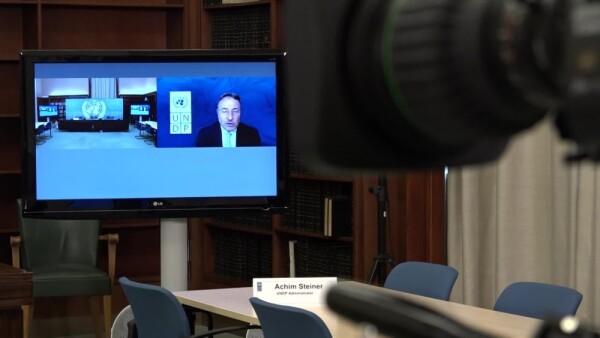
- Wide shot, Press conference room, podium speakers, large TV screens showing broadcast image and external UNDP speaker.
- SOUNDBITE (ENGLISH): Achim Steiner, UNDP Administrator: “We’re witnessing a tragic series of events that are unfolding in Sri Lanka right now that should be a warning to anyone who thinks that, you know, it is up to countries themselves to figure out how to deal with this crisis.”
- Medium shot, Achim Steiner’s nameplate in foreground, broadcast image and room view to rear on large TV screen.
- SOUNDBITE (ENGLISH): Achim Steiner, UNDP Administrator: “That default essentially means the country is no longer able to pay - or not only service - its debt, but actually to import fundamental parts of what keeps an economy alive, whether it is petrol or it is diesel, whether it is fuel, whether it is medicines.”
- Medium shot, multiscreen at UN Geneva TV studio.
- SOUNDBITE (ENGLISH): George Gray Molina, UNDP Senior Economist: “With COVID, what we saw is effects that worked through labour markets, lockdowns, and income, that was slowly cumulative but had a strong impact over time. So, the official estimates are about 125 million people falling into poverty over about 18 months; so what we found right now is that three months of inflation have drawn about 71 million people into poverty.”
- Medium shot, participants, masked.
- SOUNDBITE (ENGLISH): Achim Steiner, UNDP Administrator: “Very quickly we might see also with the troubling economic outlook a situation where for many countries the patience and the ability of people to cope with this reality runs out. And as I’ve often said, when politics moves out of our parliaments, out of government, onto the streets, we are in a fundamentally different situation. We are very vulnerable at this moment to see these kinds of developments happen in many more countries.”
- Medium shot, multiscreen at UNTV studio.
- SOUNDBITE (ENGLISH): Achim Steiner, UNDP Administrator: “There is potential through the multilateral investment banks for example by paying in more capital, to allow them to provide through targeted lending and crisis response measures including the IMF, ways and means by which countries can address more specifically their needs, and that does not necessarily have to be in contradiction to the inflationary pressure measures that are being taken.”
- Close-up, TV camera lens partly shown in foreground, large TV screen to rear featuring speaker.
- SOUNDBITE (ENGLISH): Achim Steiner, UNDP Administrator: “You also have to be smarter about it and the IMF originally put together some of the responses to COVID; most developing countries at the end of the day did not dare to borrow against those measures because immediately the rating agencies would downgrade them.”
- Close-up, TV screen in perspective, participants, masked, to rear.
- Medium-wide shot, UNTV studio control room.
- Wide shot, press conference room, participants, light panel on tripod and mounted TV camera.
Similar Stories

1
1
1
Press Conferences | UNEP , ITU , UNICEF , UNHCR , OHCHR , IOM , WHO , UNECE
UNEP: Update on the first Global Framework on Chemicals Conference, ITU: 2026 Plenipotentiary Conference in Doha, UNICEF: Drones and drought worsen the crisis for children in Sudan, UNHCR: Nigerians flee violence, OHCHR attacks against press freedom in Egypt, IOM Ebola prevention and surveillance, WHO Ebola prevention and surveillance, UNECE UN Water Conference

1
1
1
Edited News | OHCHR , UNOG
UN Human Rights on Tuesday called on Egypt to end the persecution, harassment and intimidation of independent journalists and media outlets, and to respect press freedom.

1
1
2
Edited News | UNICEF
Drones and drought are "closing in" on Sudan, the UN Children's Fund, UNICEF, said on Tuesday, describing unprecedented attacks on the country's infrastructure including by drones travelling up to 1,500 kilometres before hitting their target.
"It is an assault unlike anything Sudan has seen before. In the last week of October, not a single day passed without a drone strike on a power station in Sudan. Up to 15 were hit in the month of October,” said agency spokesperson James Elder.
1
1
1
Press Conferences | WMO
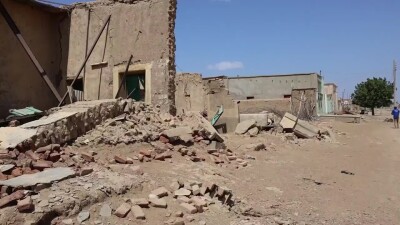
Speakers:
- Celeste Saulo, WMO Secretary-General
- John Kennedy, WMO Head of Climate Information
1
1
1
Edited News | IOM , UNHCR
Aid teams working to help millions of people uprooted by the ongoing war in Sudan appealed on Friday for more international assistance amid desperate funding shortages, empty warehouses and overwhelming needs.
1
1
1
Press Conferences | UNHCR , IOM , UNICEF , WHO
UNHCR / IOM: Millions at risk of losing emergency shelter as funding runs out; UNHCR: warns of severe climate risks facing displaced people ahead of COP31, UNICEF: children in Ukraine face major water supply disruptions amid attacks on energy infrastructure; WHO: together for science and health.
1
1
1
Edited News | UNICEF
Ukraine has sustained almost 2,000 attacks on education since the full-scale Russian invasion in 2022, with some 270 this year alone, the UN Children’s Fund (UNICEF) said on Tuesday.
1
1
1
Press Conferences | ILO , ITU , UNFPA , UNICEF , WHO
UNICEF: Education Cannot Wait (ECW) High-Level Replenishment Conference - mobilising funding for education for children affected by crises; Children in Ukraine have two-thirds of school hours disrupted by daily air-raid alarms. UNFPA: Yemen: conditions for women and girls in the besieged city of Taizz and in IDP camps; the status of maternal health facilities/services in Taizz City and in other conflict-affected areas. ILO: “Women in Business and Management report: Scaling Success". ITU: Facts and Figures 2026 report on global digital connectivity. WMO and International Ski and Snowboard Federation new guide on weather and climate services for ski resorts; WMO State of Climate Update at COP31
1
1
1
Edited News | UNHCR
More than 280,000 people have now been displaced by fighting in Yemen and many vulnerable people are unable to access lifesaving relief because it is too dangerous to do so, the UN refugee agency (UNHCR) said on Friday.
1
1
1
Press Conferences | OCHA , UN , UNHCR
UN Joint Inspection Unit: JIU at 60 - Who Holds the UN System Accountable? From Recommendations to Results – How Independent System-wide Oversight Contributes to Change; UNHCR: UNHCR winter appeal: 9m people urgently need winter aid as resources dwindle and temperatures slide; Refugees in Yemen trapped between conflict, displacement and dangerous journeys
1
1
1
Edited News | UN
Tour guides at UN Geneva turned heads at the Palace of Nations on Thursday as they unveiled stylish new uniforms, designed in partnership with leading Italian sustainable fashion designers and manufacturers.
1
1
1
Press Conferences | WMO , UNHCR , WHO , ILO
WMO: Greenhouse Gas Bulletin; UNHCR: As attacks intensify UNHCR urges support for war ravaged Ukrainians; WHO: Clinical trials in DRC: vaccines and beyond; ILO: New global and regional estimates on domestic work, informality and working conditions