

The United Nations Office at Geneva
Multimedia Newsroom
World has enough food to withstand COVID crisis, says UN agency
Lower-than-expected production levels in China following the relaxation of lockdown measures there could be an indicator that tens of millions more people will have too little to eat globally, the Food and Agriculture Organization of the United Nations (FAO) said on Friday, while noting that there is no shortage of basic foodstuffs.
“Today, we have 821 million people undernourished, so we are talking of an increase of around eight per cent to 10 per cent of that number if there are changes in GDP growth,” said Maximo Torero, FAO Chief Economist and Assistant-Director General for the Economic and Social Development Department.
“Our lowest scenario with two per cent GDP growth is around (a) 30 million increase, our highest scenario is 88 million people going to undernourishment.”
An early assessment of the output of China, the world’s second largest economy, indicated that “despite their coming back to work, we don’t see the level of recovery that was expected”, Mr Torero said.
“On the contrary, it is very slow. And that clearly tells us we are talking of a low level of GDP growth across the world, and that means a lower demand. And that’s something I don’t think we will be able to move.”
In previous health crises, such as the Ebola epidemic in West Africa from 2014-16, FAO reported that restrictions on movement to curb disease transmission impacted heavily on farmers and migrant workers.
Today, the UN agency explained that producers in developing countries have been threatened by measures to contain the spread of the new coronavirus, as these have affected food exports and imports.
In an appeal for the free movement of food across borders “with no restrictions”, Mr Torero said that slowing the flow of food “is the worst that could happen”.
In addition, there was no need for such embargoes, he maintained, given the surplus of staple foods – principally rice, maize and wheat - now available globally.
“There is no reason, no reason, to have a food price crisis like we had in 2007…in the staple world. You have enough food available, it is just a result of logistical problems.”
But worries remain over more fragile, high-value foodstuffs in coming months, such as fruit, meat and fish, as these require far more workers to bring to market within strict deadlines.
Here, the sector is under threat because millions of migrant farmworkers “cannot move because of borders crackdowns”, the FAO official explained, adding that as the pandemic evolves, “concerns emerge about shortages of their labour during planting and harvesting season, affecting especially labour-intensive crops such as fruits and vegetables”.
Mr Torero added: “The high-value commodities – fruits, vegetables, meats – are more labour intensive…the labour force has been affected because of the lockdowns, because of the health issues. Not only that, they are more affected by logistical issues because the commodities are perishable. And those are where we are seeing some complexities and that’s where we are saying to countries that they need to put them as a priority sector, because we need to protect the value chain so that the labour force can keep moving during the harvest, and so that the value chain continues to operate.”
One of FAO’s key concerns is the vulnerability of mainly poor, export-led economies as the pandemic grinds on; their workers are unlikely to benefit from the injection of billions of dollars into the global marketplace to support trade by richer, industrialised countries, as local currencies suffer against stronger denominations, it believes.
“The money that is being pumped into the system has several effects; one effect is devaluation; which will make things more expensive, for sure,” said Mr Torero. “But that doesn’t mean that the farmers will get bigger prices, it means that the price that the importer countries will have to pay in the local currency will be higher.”
To mitigate the pandemic’s impacts on food and agriculture, FAO’s recommendations include urging countries to meet the food needs of vulnerable populations, boost their social protection programmes, keep global food trade going, keep the domestic supply chain gears moving, and support smallholder farmers’ ability to increase food production.
Such measures are needed urgently given the already high global jobless figures, Mr Torero said, with “21 million unemployed in the US and the levels of unemployment we are observing in most developing countries which are mostly informal economies (where) they won’t get the formal support”.
He added: “The millions that are being pumped won’t be touching them. It will be very difficult, in order to touch them. If that would happen in the European countries and even in the US, the way companies can adjust is extremely flexible; labour regulations are different in Europe.”
- Wide shot: exterior, flag alley, Palais des Nations, United Nations Geneva.
- Wide shot: Press Room III, with four people visible in shot, including three on podium.
- SOUNDBITE (EN) - Mr Maximo Torero, Chief Economist and Assistant-Director General for the Economic and Social Development Department at the Food and Agriculture Organization of the United Nations (FAO): “Today we have 821 million people undernourished, so we are talking of an increase of around eight per cent to 10 per cent of that number if there are changes in GDP growth; so essentially our lowest scenario with two per cent GDP growth is around 30 million increase, our highest scenario is 88 million people going to undernourishment.”
- Medium shot: UN Geneva building, flag alley.
- SOUNDBITE (EN) - Mr Maximo Torero, Chief Economist and Assistant-Director General for the Economic and Social Development Department at the Food and Agriculture Organization of the United Nations (FAO): “The money that is being pumped into the system has several effects; one effect is devaluation; which will make things more expensive, for sure. But that doesn’t mean that the farmers will get bigger prices, it means that the price that the importer countries will have to pay in the local currency will be higher.”
- Medium shot: Place des Nations, Geneva, with UN Geneva flag alley in background.
- SOUNDBITE (EN) - Mr Maximo Torero, Chief Economist and Assistant-Director General for the Economic and Social Development Department at the Food and Agriculture Organization of the United Nations (FAO): “There is no reason, no reason, to have a food price crisis like we had in 2007, seen of course in the staple world. You have enough food available, it is just a result of logistical problems.”
- Medium shot: zooming out, Pregny Gate, UN Geneva.
- SOUNDBITE (EN) - Mr Maximo Torero, Chief Economist and Assistant-Director General for the Economic and Social Development Department at the Food and Agriculture Organization of the United Nations (FAO): “On the other group of commodities, which is high-value commodities, there is a bigger problem, because staples are capital-intensive. The high-value commodities – fruits, vegetables, meats – are more labour intensive, so the labour force has been affected because of the lockdowns, because of the health issues. Not only that, they are more affected by logistical issues because the commodities are perishable. And those are where we are seeing some complexities and that’s where we are saying to countries that they need to put them as a priority sector, because we need to protect the value chain so that the labour force can keep moving during the harvest, and so that the value chain continues to operate.”
- Wide shot: Pregny Gate, UN Geneva
- SOUNDBITE (EN) - Mr Maximo Torero, Chief Economist and Assistant-Director General for the Economic and Social Development Department at the Food and Agriculture Organization of the United Nations (FAO): “The levels of unemployment we are observing today; 21 million unemployed in the US and the levels of unemployment we are observing in most developing countries which are mostly informal economies, which they won’t get the formal support. So, the millions that are being pumped won’t be touching them. It will be very difficult, in order to touch them. If that would happen in the European countries and even in the US, the way companies can adjust is extremely flexible; labour regulations are different in Europe.”
- Medium wide shot: UN Palais, aerial shot, UN flag fluttering in foreground, building to rear.
- SOUNDBITE (EN) - Mr Maximo Torero, Chief Economist and Assistant-Director General for the Economic and Social Development Department at the Food and Agriculture Organization of the United Nations (FAO): “If you look at China today, still, despite their coming back to work, we don’t see the level of recovery that was expected. On the contrary it is very slow. And that clearly tells us we are talking of a low level of GDP growth across the world, and that means a lower demand. And that’s something I don’t think we will be able to move.”
- Medium shot: Place des Nations, Geneva, broken chair sculpture.
- Medium shot: Place des Nations, Geneva.
Similar Stories

1
1
1
Edited News | OHCHR , UNOG
UN Human Rights on Tuesday called on Egypt to end the persecution, harassment and intimidation of independent journalists and media outlets, and to respect press freedom.

1
1
2
Edited News | UNICEF
Drones and drought are "closing in" on Sudan, the UN Children's Fund, UNICEF, said on Tuesday, describing unprecedented attacks on the country's infrastructure including by drones travelling up to 1,500 kilometres before hitting their target.
"It is an assault unlike anything Sudan has seen before. In the last week of October, not a single day passed without a drone strike on a power station in Sudan. Up to 15 were hit in the month of October,” said agency spokesperson James Elder.
1
1
1
Edited News | IOM , UNHCR
Aid teams working to help millions of people uprooted by the ongoing war in Sudan appealed on Friday for more international assistance amid desperate funding shortages, empty warehouses and overwhelming needs.

1
1
1
Edited News | UNICEF
Ukraine has sustained almost 2,000 attacks on education since the full-scale Russian invasion in 2022, with some 270 this year alone, the UN Children’s Fund (UNICEF) said on Tuesday.
1
1
1
Edited News | UNHCR
More than 280,000 people have now been displaced by fighting in Yemen and many vulnerable people are unable to access lifesaving relief because it is too dangerous to do so, the UN refugee agency (UNHCR) said on Friday.

1
1
1
Edited News | UN
Tour guides at UN Geneva turned heads at the Palace of Nations on Thursday as they unveiled stylish new uniforms, designed in partnership with leading Italian sustainable fashion designers and manufacturers.
1
1
1
Edited News | OCHA , UNICEF , WFP
Aid agencies warned on Friday of the fast-developing humanitarian emergency inside Taiz City in Yemen, which has been encircled by de facto Houthi forces fighting government troops along the country’s west coast.
2
17
1
2
Edited News , Press Conferences , Images | OCHA , WMO
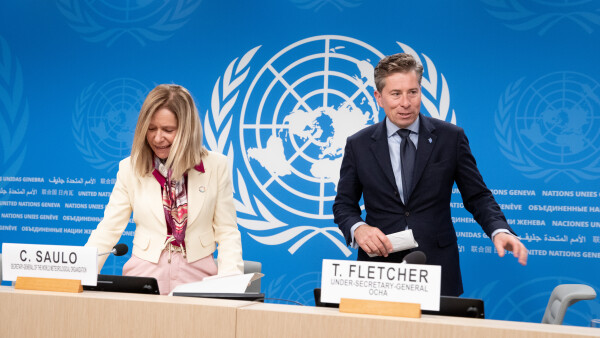
Two UN agencies teamed up on Wednesday to issue an appeal for immediate assistance to help communities already being impacted by the strongest El Niño on record.
3
16
2
2
Edited News , B-roll , Conferences , Images | UNITED NATIONS , UNOG
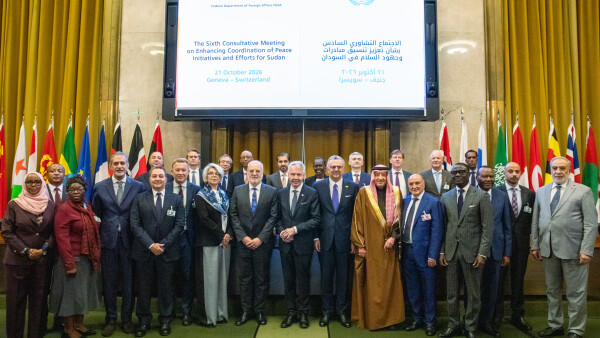
Sixth Consultative Meeting on Enhancing Coordination of Peace Initiatives and Efforts for Sudan
1
1
1
Edited News | UNICEF , WHO , UNHCR
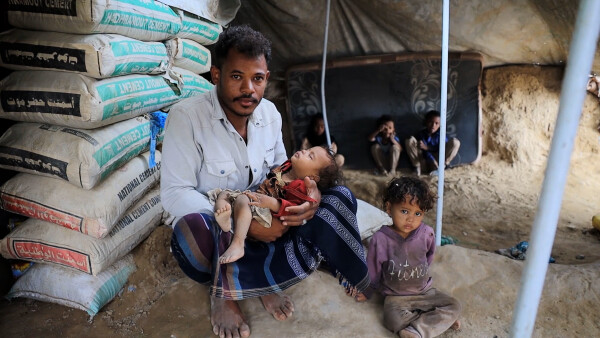
Yemen war continues to force families from homes amid hunger and disease
More than 250,000 people have now fled renewed fighting in Yemen, the UN said on Tuesday, citing particular concern for those sheltering in the southwestern city of Taiz and the wider governorate, where access is “essentially blocked”.
1
1
1
Edited News | UNICEF
A little over one year since a ceasefire agreement was announced between Hamas fighters and Israel, more than 340 children have been reported killed and hundreds more injured, the UN Children’s Fund, UNICEF, said on Friday.
1
1
1
Edited News | UNICEF , IFRC
Six weeks after Nepal’s deadly flooding disaster, communities are still struggling to rebuild their lives, but they will need sustained help as global warming increases the risk of another Himalayan catastrophe, the UN Children’s Fund (UNICEF) said on Friday.