

The United Nations Office at Geneva
Multimedia Newsroom
Gaza: ‘Unacceptable’ choice between getting shot or getting fed – UN humanitarians
Following the deaths of several children in an Israeli strike on Palestinians waiting in line for nutritional supplements in central Gaza on Thursday, UN humanitarians have once again condemned the killings of people at aid distribution sites in the enclave.
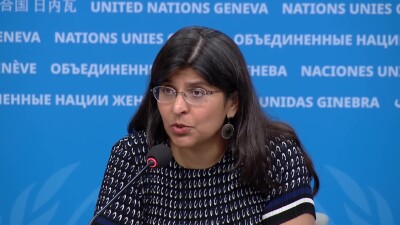
UN Human Rights Office (OHCHR) spokesperson Ravina Shamdasani told reporters in Geneva on Friday, “We've raised concerns about atrocity crimes having been committed and the risk of further atrocity crimes being committed, where people are lining up for essential supplies such as food and medicine and where they are being attacked, where again… they have a choice between being shot or being fed”.
“This is unacceptable and it's continuing,” she deplored.
Ms. Shamdasani said that her office is still looking into the incident in which, according to media reports, at least 15 Palestinians including women and children were killed by a strike in front of a clinic in Deir al-Balah run by US-based aid group Project Hope, a partner organization of the UN Children’s Fund (UNICEF).
In a statement on Thursday UNICEF chief Catherine Russell said that the killing of families trying to access life-saving aid is “unconscionable”.
The Israeli military reportedly said that it was targeting a Hamas member involved in the terror attacks in Israel on 7 October 2023. Asked about the rationale of putting civilians, including children, in mortal danger when targeting one specific person, Ms. Shamdasani said that over the course of the conflict in Gaza OHCHR has had serious concerns about respect for essential international humanitarian law principles, including the principles of distinction and proportionality in attack.
“We have seen that of the overall death toll in Gaza, a large proportion are women and children. And again, that raises serious questions about whether these principles are being respected,” she said.
Killings of Gazans at or around aid distribution sites and near humanitarian convoys have become a regular occurrence in a context of restrictions on the entry of food, fuel and relief items into the Strip and particularly since the establishment of non-UN food distribution sites operated by the Gaza Humanitarian Foundation (GHF).
Since late May, this militarized aid distribution model, backed by Israel and the United States, has sought to sideline the UN and its humanitarian partners.
OHCHR’s Ms. Shamdasani said that from 27 May, when the GHF started operations in Gaza, until 7 July, OHCHR recorded 798 killings “including 615 in the vicinity of the GHF sites and 183 presumably on the routes of aid convoys”.
The almost deaths of almost 800 people trying to access aid were “mostly due to… gunshot injuries”, Ms. Shamdasani said.
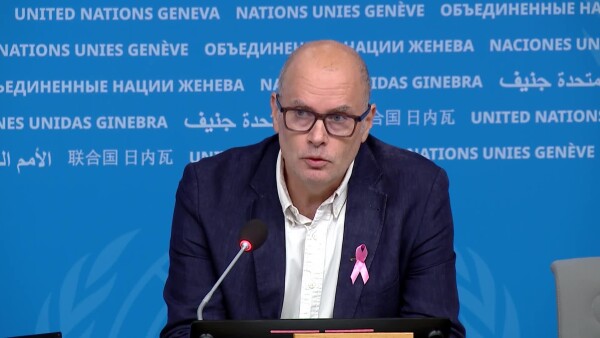
Joining her in condemning the killings, World Health Organization (WHO) spokesperson Christian Lindmeier said that he is “slowly lacking words to describe the scenario”.
“People being shot at distribution sites… scores of women and children and men and boys and girls being killed while either getting food or in what’s supposedly safe shelters or on the road to health clinics or inside health clinics - this is far beyond unacceptable.”
Asked to comment on a 75,000-litre fuel delivery into Gaza on Wednesday, the first such provision in over 130 days, Mr. Lindmeier said that “as good as it is that these this amount of fuel came finally in… we should not be relying on special news of special deliveries,” be it on fuel, food or other relief items.
“There should be a reoccurring delivery into Gaza to keep the lifelines open, to supply the ambulances, the hospitals, the water desalination plants, the bakeries… whatever is necessary to keep a little bit of lifeline open there, to run the incubators,” he said.
The WHO spokesperson pointed out that 94 per cent of the hospitals in Gaza are now damaged or destroyed, while displacement continues and civilians are being pushed into ever smaller spaces.
Mr. Lindmeier also expressed his hope for a positive outcome of the ongoing ceasefire talks.
“Peace is the best medicine and opening the doors remains the only viable option,” he concluded.
-Ends-
STORY Gaza Deir Al-Balah killings OHCHR - WHO 11 July 2025
TRT: 2:47”
SOURCE: UNTV CH
RESTRICTIONS: NONE
LANGUAGE: ENGLISH/NATS
ASPECT RATIO: 16:9
DATELINE: 11 JULY 2025 GENEVA, SWITZERLAND
1. Exterior wide shot: Palais des Nations, Flag Alley.
2. Wide shot: Speakers at the podium of the press conference; journalists in the Press room.
3. SOUNDBITE (English) – Ravina Shamdasani, spokesperson, UN Human Rights Office (OHCHR): “We've raised concerns about atrocity crimes having been committed and the risk of further atrocity crimes being committed. Where people are lining up for essential supplies such as food and medicine and where they are being attacked, where again, as my colleagues have said, they have a choice between being shot or being fed – this is unacceptable and it's continuing.”
4. Close shot: Journalist in the Press room.
5. SOUNDBITE (English) – Ravina Shamdasani, spokesperson, UN Human Rights Office (OHCHR): “Up until 7 July, we've recorded now 798 killings, including 615 in the vicinity of the GHF [Gaza Humanitarian Foundation] sites and 183 presumably on the routes of aid convoys. This is nearly 800 people who have been killed while trying to access aid, mostly due to, mostly the injuries are gunshot injuries.”
6. Wide shot: Journalists in the Press room; speaker on screens.
7. SOUNDBITE (English) – Ravina Shamdasani, spokesperson, UN Human Rights Office (OHCHR): “In the course of this conflict, we have had serious concerns about respect for international humanitarian law principles, essential principles of distinction, proportionality in attack. We have seen that of the overall death toll in Gaza, a large proportion are women and children. And again, that raises serious questions about whether these principles are being respected.”
8. Wide shot: Speakers at the podium of the press conference; speaker on screens.
9. SOUNDBITE (English) – Christian Lindmeier, spokesperson, World Health Organization (WHO): “I'm slowly lacking words to describe the scenario. People being shot at distribution sites, the numbers of, scores of women and children and men and boys and girls being killed while either getting food or in what’s supposedly safe shelters or on the road to health clinics or inside health clinics. This is far beyond unacceptable.”
10. Medium shot: Journalist in the Press room.
11. SOUNDBITE (English) – Christian Lindmeier, spokesperson, World Health Organization (WHO): “We should not be relying on special news of special deliveries. Whether it's on fuel, on food or whatever, it should not even be a question. There should be a reoccurring delivery into Gaza to keep the lifelines open, to supply the ambulances, the hospitals, the water desalination plants, the bakeries, what have you, whatever is necessary to keep a little bit of lifeline open there to run the incubators as you mentioned them. So, peace is the best medicine and opening the doors remains the only viable option.”
12. Various shots of speakers and journalists in the Press room.
Similar Stories

1
1
1
Edited News | OHCHR , UNOG
UN Human Rights on Tuesday called on Egypt to end the persecution, harassment and intimidation of independent journalists and media outlets, and to respect press freedom.

1
1
2
Edited News | UNICEF
Drones and drought are "closing in" on Sudan, the UN Children's Fund, UNICEF, said on Tuesday, describing unprecedented attacks on the country's infrastructure including by drones travelling up to 1,500 kilometres before hitting their target.
"It is an assault unlike anything Sudan has seen before. In the last week of October, not a single day passed without a drone strike on a power station in Sudan. Up to 15 were hit in the month of October,” said agency spokesperson James Elder.
1
1
1
Edited News | IOM , UNHCR
Aid teams working to help millions of people uprooted by the ongoing war in Sudan appealed on Friday for more international assistance amid desperate funding shortages, empty warehouses and overwhelming needs.
1
1
1
Edited News | UNICEF
Ukraine has sustained almost 2,000 attacks on education since the full-scale Russian invasion in 2022, with some 270 this year alone, the UN Children’s Fund (UNICEF) said on Tuesday.
1
1
1
Edited News | UNHCR
More than 280,000 people have now been displaced by fighting in Yemen and many vulnerable people are unable to access lifesaving relief because it is too dangerous to do so, the UN refugee agency (UNHCR) said on Friday.

1
1
1
Edited News | UN
Tour guides at UN Geneva turned heads at the Palace of Nations on Thursday as they unveiled stylish new uniforms, designed in partnership with leading Italian sustainable fashion designers and manufacturers.
1
1
1
Edited News | OCHA , UNICEF , WFP
Aid agencies warned on Friday of the fast-developing humanitarian emergency inside Taiz City in Yemen, which has been encircled by de facto Houthi forces fighting government troops along the country’s west coast.
2
17
1
2
Edited News , Press Conferences , Images | OCHA , WMO
Two UN agencies teamed up on Wednesday to issue an appeal for immediate assistance to help communities already being impacted by the strongest El Niño on record.
3
16
2
2
Edited News , B-roll , Conferences , Images | UNITED NATIONS , UNOG
Sixth Consultative Meeting on Enhancing Coordination of Peace Initiatives and Efforts for Sudan
1
1
1
Edited News | UNICEF , WHO , UNHCR
Yemen war continues to force families from homes amid hunger and disease
More than 250,000 people have now fled renewed fighting in Yemen, the UN said on Tuesday, citing particular concern for those sheltering in the southwestern city of Taiz and the wider governorate, where access is “essentially blocked”.
1
1
1
Edited News | UNICEF
A little over one year since a ceasefire agreement was announced between Hamas fighters and Israel, more than 340 children have been reported killed and hundreds more injured, the UN Children’s Fund, UNICEF, said on Friday.
1
1
1
Edited News | UNICEF , IFRC
Six weeks after Nepal’s deadly flooding disaster, communities are still struggling to rebuild their lives, but they will need sustained help as global warming increases the risk of another Himalayan catastrophe, the UN Children’s Fund (UNICEF) said on Friday.