
The United Nations Office at Geneva
Multimedia Newsroom
‘No end’ expected to devastation from water-related emergencies, says UN weather agency
The world’s water resources face growing pressure from climate change while emergencies involving the vital resource are increasingly impacting lives and livelihoods, the UN World Meteorological Organization (WMO) said on Thursday.
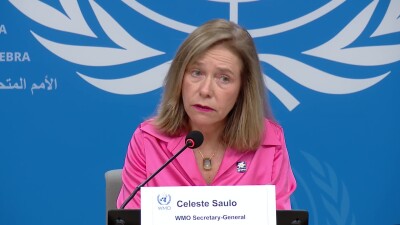
“Water-related hazards continue to cause major devastation this year,” said Celeste Saulo, WMO Secretary-General. “The latest examples are the devastating monsoon flooding in Pakistan, floods in South Sudan and the deadly flash-floods in the Indonesian island of Bali. And unfortunately, we see no end to this trend.”
Ms. Saulo noted that these emergencies have been happening amid increasingly warm air temperatures, which allow more water to be held in the atmosphere leading to heavier rainfall.
Her comments coincided with the publication of a new WMO report on the state of the world’s waterways, snow and ice which notes that 2024 was the hottest in 175 years of observation, with the annual mean surface temperature reaching 1.55 °C above the pre-industrial baseline from 1850 to 1900.
Against this backdrop in September 2024, central and eastern Europe experienced devastating flash-floods caused by deadly Storm Boris which uprooted tens of thousands of people. Similar disasters are likely to happen more often, even though they should - in theory - be extremely rare, the UN agency maintained.
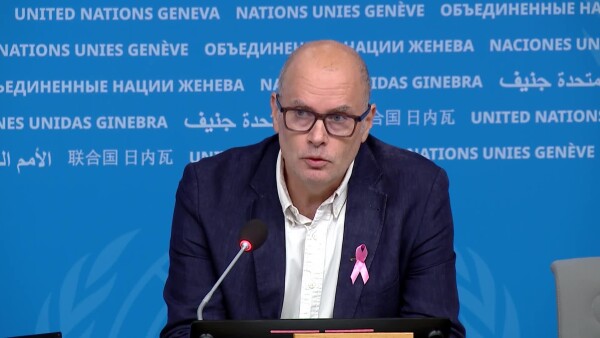
“In the Czech Republic, several rivers had such an extreme flood event that actually statistically should only occur every 100 years,” said Stefan Uhlenbrook, WMO Director of Hydrology, Water and Cryosphere Division. “A ‘century event’ happened…unfortunately, statistics show that these extreme events might come even more frequent.”
Another example of the increasingly erratic behaviour of the world’s water cycle is the extremely heavy rainfall that has affected parts of Himachal Pradesh or Jammu and Kashmir. “The region saw extremely heavy rainfall when it was not expected; the monsoon came early,” said Sulagna Mishra, WMO Scientific Officer. “So, this is what we are talking about as the unpredictability of the system is growing, more and more.”
Turning to the impact of last year’s pronounced El Niño weather phenomenon, WMO’s report indicates that it contributed to severe drought in the Amazon basin last year. Equally, northwest Mexico and the northern part of North America saw below-average rainfall, as did southern and southeastern Africa. “El Niño at the start of 2024 played a role,” explained Ms. Saulo, “but scientific evidence shows that our changing climate and rising temperatures lead to more extreme events, both droughts and floods.”
Among the WMO report’s other findings, it confirms wetter-than-normal conditions over central-western Africa, Lake Victoria in Africa, Kazakhstan and southern Russia, central Europe, Pakistan and northern India, southern Iran and north-eastern China in 2024.
One of the key messages of the UN agency report is that what happens to the water cycle in one part of the world has a direct bearing on another.
“It's not local,” insisted Ms. Mishra. “You see the…impact of melting glaciers in the Arctic and these are impacting the monsoons through the large circulation patterns. It is impacting the monsoon in Asia or we see hurricanes in the Pacific and we know through studies that these are all connected.”
Melting glaciers continue to be a major concern for meteorologists because of the speed at which they are disappearing and their existential threat to communities downstream and in coastal areas.
“In terms of glaciers, 2024 was the third straight year with widespread glacial loss across all regions,” Ms. Saulo said. “Glaciers lost 450 gigatonnes, this is the equivalent of a huge block of ice seven kilometres in height, seven kilometres wide and seven kilometres deep, or 180 million Olympic swimming pools, enough to add about 1.2 millimetres to global sea level, increasing the risk of floods for hundreds of millions of people on the coasts.”
The report also highlights the critical need for improved data-sharing on streamflow, groundwater, soil moisture and water quality, which remain heavily under-monitored.
The WMO's 2024 State of Global Water Resources report is a WMO flagship product that presents an overall picture of available water resources globally, allowing for the assessment of status of water resources.
The report highlights a critical need for more investment, international collaboration, improved monitoring and data sharing, to improve early warning.
ends
STORY: WMO - world water monitor
TRT: 3’00”
SOURCE: UNTV CH
RESTRICTIONS: NONE
LANGUAGE: ENGLISH/ NATS
ASPECT RATIO: 16:9
DATELINE: 18 SEPTEMBER 2025 GENEVA, SWITZERLAND
Speaker:
- Celeste Saulo, WMO Secretary-General
- Stefan Uhlenbrook, WMO Director of Hydrology, Water and Cryosphere Division
- Sulagna Mishra, WMO Scientific Officer
SHOTLIST
- Exterior wide shot: Palais des Nations, flag alley.
- Wide, podium speakers, UN Geneva Press room.
- SOUNDBITE (English) – Celeste Saulo: “Unfortunately, water-related hazards continue to cause major devastation this year; the latest examples are the devastating monsoon flooding in Pakistan, floods in South Sudan and the deadly flash-floods in the Indonesian island of Bali. And unfortunately, we see no end to this trend.”
- Wide, podium speakers.
- SOUNDBITE (English) – Stefan Uhlenbrook: “In the Czech Republic, several rivers had such an extreme flood event that actually statistically should only occur every 100 years. But in this year, we exceeded this at a number of river basins, so it's kind of a really, a century event happened in this and, unfortunately, statistics show that these extreme events might come even more frequent.”
- Medium, podium speakers, TV screens showing speaker.
- SOUNDBITE (English) – Sulagna Mishra: “We mentioned erratic behaviour of the water cycle. This is one such example of the erratic behaviour that parts of Himachal Pradesh or Jammu Kashmir in the region saw extremely heavy rainfall when it was not expected; the monsoon came early and it was extremely heavy. So, this is what we are talking about as the unpredictability of the system is growing, more and more.”
- Wide, journalists, one taking video with mobile phone.
- SOUNDBITE (English) – Celeste Saulo: “The Amazon Basin and other parts of South America, as well as southern Africa, were gripped by severe drought. On the contrary, it was very wet in central, western and eastern Africa, parts of Asia and Central Europe.”
- Medium, TV journalist.
- SOUNDBITE (English) – Sulagna Mishra: “It's not local, you see the impact of teleconnections, for example, impact of melting glaciers in the Arctic and these are impacting the monsoons through the large circulation patterns. It is impacting the monsoon in Asia or we see hurricanes in the Pacific and we know through studies that these are all connected.”
- Medium, journalists.
- SOUNDBITE (English) – Celeste Saulo: “In terms of glaciers, 2024 was the third straight year with widespread glacial loss across all regions. Glaciers lost 450 gigatonnes, this is the equivalent of a huge block of ice seven kilometres in height, seven kilometres wide and seven kilometres deep, or 180 million Olympic swimming pools, enough to add about 1.2 millimetres to global sea level, increasing the risk of floods for hundreds of millions of people on the coasts.”
- Wide, Press room technician, UN logo reflected in screen.
Similar Stories

1
1
1
Edited News | OHCHR , UNOG
UN Human Rights on Tuesday called on Egypt to end the persecution, harassment and intimidation of independent journalists and media outlets, and to respect press freedom.

1
1
2
Edited News | UNICEF
Drones and drought are "closing in" on Sudan, the UN Children's Fund, UNICEF, said on Tuesday, describing unprecedented attacks on the country's infrastructure including by drones travelling up to 1,500 kilometres before hitting their target.
"It is an assault unlike anything Sudan has seen before. In the last week of October, not a single day passed without a drone strike on a power station in Sudan. Up to 15 were hit in the month of October,” said agency spokesperson James Elder.
1
1
1
Edited News | IOM , UNHCR
Aid teams working to help millions of people uprooted by the ongoing war in Sudan appealed on Friday for more international assistance amid desperate funding shortages, empty warehouses and overwhelming needs.

1
1
1
Edited News | UNICEF
Ukraine has sustained almost 2,000 attacks on education since the full-scale Russian invasion in 2022, with some 270 this year alone, the UN Children’s Fund (UNICEF) said on Tuesday.
1
1
1
Edited News | UNHCR
More than 280,000 people have now been displaced by fighting in Yemen and many vulnerable people are unable to access lifesaving relief because it is too dangerous to do so, the UN refugee agency (UNHCR) said on Friday.

1
1
1
Edited News | UN
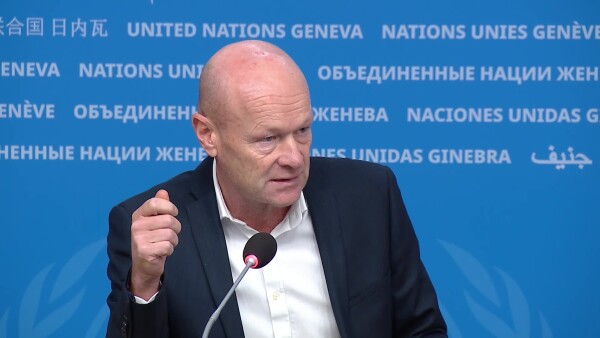
Tour guides at UN Geneva turned heads at the Palace of Nations on Thursday as they unveiled stylish new uniforms, designed in partnership with leading Italian sustainable fashion designers and manufacturers.
1
1
1
Edited News | OCHA , UNICEF , WFP
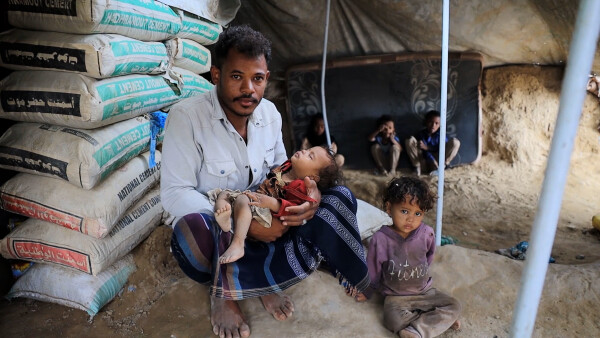
Aid agencies warned on Friday of the fast-developing humanitarian emergency inside Taiz City in Yemen, which has been encircled by de facto Houthi forces fighting government troops along the country’s west coast.
2
17
1
2
Edited News , Press Conferences , Images | OCHA , WMO
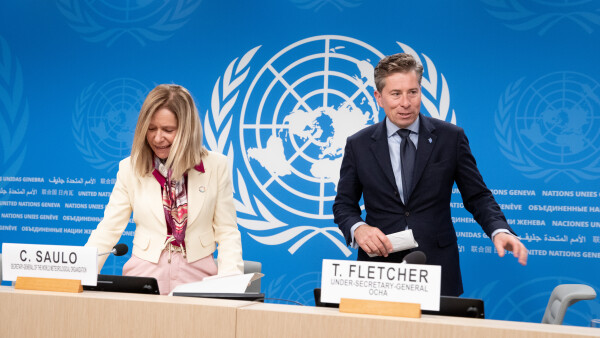
Two UN agencies teamed up on Wednesday to issue an appeal for immediate assistance to help communities already being impacted by the strongest El Niño on record.
3
16
2
2
Edited News , B-roll , Conferences , Images | UNITED NATIONS , UNOG
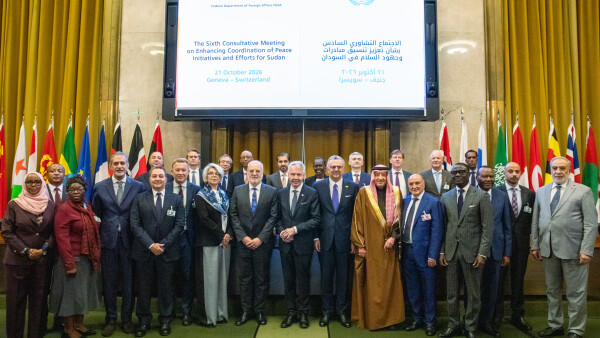
Sixth Consultative Meeting on Enhancing Coordination of Peace Initiatives and Efforts for Sudan
1
1
1
Edited News | UNICEF , WHO , UNHCR
Yemen war continues to force families from homes amid hunger and disease
More than 250,000 people have now fled renewed fighting in Yemen, the UN said on Tuesday, citing particular concern for those sheltering in the southwestern city of Taiz and the wider governorate, where access is “essentially blocked”.
1
1
1
Edited News | UNICEF
A little over one year since a ceasefire agreement was announced between Hamas fighters and Israel, more than 340 children have been reported killed and hundreds more injured, the UN Children’s Fund, UNICEF, said on Friday.
1
1
1
Edited News | UNICEF , IFRC
Six weeks after Nepal’s deadly flooding disaster, communities are still struggling to rebuild their lives, but they will need sustained help as global warming increases the risk of another Himalayan catastrophe, the UN Children’s Fund (UNICEF) said on Friday.