

The United Nations Office at Geneva
Multimedia Newsroom
Edited News | UNMAS
Mine action in Afghanistan, Gaza, Nigeria, Sudan UNMAS, UNAMA 03 December 2025
UN deminers appeal for greater support to slow deadly legacy from world’s conflicts
The deadly legacy of conflicts old and new from Gaza to Sudan and beyond continues to kill and maim civilians on a near-daily basis, mine action workers said on Wednesday, as they appealed for greater support for their lifesaving work in a context of deep funding cuts.
Speaking on the sidelines of a key international meeting in support of landmine action taking place at UN Geneva, experts in the field explained how shrinking resources in Afghanistan and Nigeria have exposed unsuspecting civilians to lethal unexploded ordnance, too.
Afghanistan’s child victims
According to the UN-partnered Landmine Monitor report, a staggering 77 per cent of all casualties in Afghanistan last year were children. Some 54 people are killed there every month by the explosive remnants of war, giving the country the third highest explosive ordnance casualty figures in the world.
“It tends to be kids, mostly boys in the hills tending sheep and goats and they are picking up things of interest and playing with them or throwing stones at them and killing or injuring themselves,” explained Nick Pond, who heads mine action work at the UN Assistance Mission in Afghanistan (UNAMA).
Despite the urgent need for more deminers to make Afghanistan safe after decades of conflict, a lack of funding has meant that the UN-led team has “dropped and dropped”, Mr. Pond told journalists. “In 2011 there were 15,000 people working in demining, and now we've got about 1,300.”
Total recorded child casualties in Afghanistan since 1999 number 30,154 children, “so the work in Afghanistan is key to decreasing the [global] number of casualties”, said Christelle Loupforest, UNMAS Representative in Geneva. She noted that although mine clearance work in the Occupied Palestinian Territory and Sudan is reasonably well funded now, the situation is dire in Afghanistan and Nigeria, with programmes facing closure by March without fresh donor support.
“It’s the same for our programme in Ethiopia,” Ms. Loupforest noted.
The situation across Sudan is also deeply concerning for stretched landmine clearance teams who fear for the 1.5 million civilians who have returned to the capital, Khartoum, the initial epicentre of the ongoing conflict between the Sudanese Armed Forces and paramilitary Rapid Support Forces (RSF).
Just five UN Mine Action Service (UNMAS) clearance teams are at work in Sudan today and “all of them are in Khartoum, because the need is so big there”, explained Sediq Rashid, UNMAS chief in Sudan. “Lots of accidents happened already and it's very, very clear: unexploded ordnance is not different than Afghanistan or Syria or Nigeria.”
El Fasher latest
In an update on El Fasher, the city besieged for more than 500 days until it was recently overrun by RSF forces, Mr. Rashid said that access remains extremely challenging.
He noted that while people endured the siege, “the shelling never stopped” and even today “[it] is not completely stopped…there are reports of the presence of landmines as well, so it's very concerning.”
Back in Khartoum, the weapons clearance expert noted that his teams have now cleared the runway of the city’s main airport, “so we are hoping that at some point Khartoum Airport will become functional and that will make things much easier in terms of deploying the humanitarian aid workers to the area”.
Nigeria returnees at risk
In Nigeria, demining teams worry that displaced communities with nowhere to go as their camps shut are putting themselves in danger by returning home where potentially lethal explosive remnants may be hidden from view.
A full 80 per cent of all civilian casualties have happened in 11 out of 15 areas of return, said Edwin Faigmane, UNMAS chief in Nigeria.
In response, UNMAS trained the Nigerian security forces, police and civil defence workers on risk education in often unstable areas that are described as “hard-to-reach”. The tactic has paid off, Mr. Faigmane continued, “as we have begun receiving reports back from the police or from community members saying that they found an item and that they've reported it to the village authorities or village leaders, who then reported on to the security and the military forces”.
Gazans still in extreme danger
Meanwhile in Gaza, UNMAS chief there Julius Van Der Walt noted that
two years of intensive combat between Hamas fighters and Israeli forces “and with explosive weapons being deployed by all parties to the conflict” had left an “absolutely immense” level of contamination.
This directly threatens Gazans and obstructs essential support to the Strip’s 2.1 million residents by restricting lifesaving humanitarian operations, slowing early recovery efforts and making critical reconstruction extremely dangerous, Mr. Van Der Walt said.
He noted how people are being injured “simply by collecting basic necessities on a day-to-day basis”, while many families “have no choice” but to shelter in areas suspected of containing explosive ordnance. “Safer alternatives simply do not exist,” the UNMAS official said.
West Bank situation worsening
Turning to the West Bank, Mr. Van Der Walt pointed to the increasing risk of widespread explosive ordnance contamination in densely populated areas, refugee camps, urban centres and rural areas. “Communities are being forced to live side by side with deadly remnants of war,” he said.
The UN Secretary-General’s campaign on mine action launched on 16 June 2025 to insist that the norms of humanitarian disarmament are upheld - and to accelerate mine action in support of human rights and national development.
The campaign is a call to action to strengthen international disarmament efforts, and protect civilians – in particular children who made up 46 per cent of casualties in 2024 - from the impact of explosive ordnance.
ends
STORY: Landmine action in Afghanistan – UNAMA UNMAS
TRT: 3 min 11s
SOURCE: UNTV CH
RESTRICTIONS: NONE
LANGUAGE: ENGLISH / NATS
ASPECT RATIO: 16:9
DATELINE: 3 December 2025 GENEVA, SWITZERLAND
Speakers:
• Nick Pond, Chief of Mine Action Section, UN Assistance Mission in Afghanistan (UNAMA)
• Sediq Rashid, UNMAS Chief of Mine Action Programme in Sudan
• Edwin Faigmane, UNMAS Chief of the Mine Action Programme in Nigeria
• Julius Van Der Walt, UNMAS Chief, Mine Action Programme, Occupied Palestinian Territory
SHOTLIST
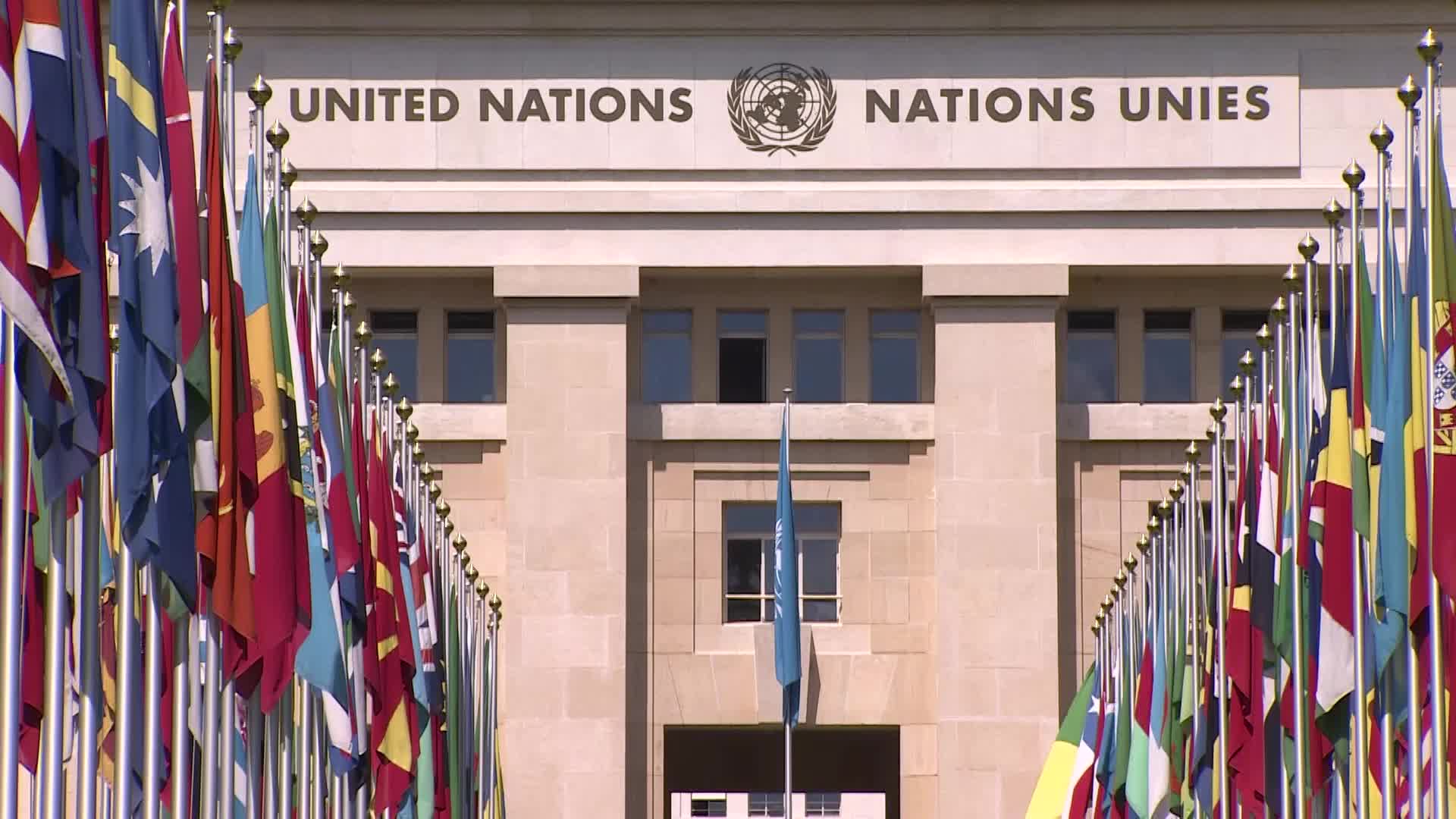
- Exterior wide shot, Palais des Nations flag alley, nations’ flags flying, a sunny day.
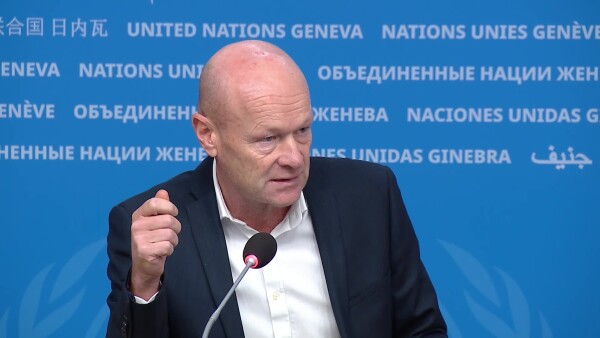
- Wide, podium speakers at UN Information Service Press room in Geneva.
- SOUNDBITE (English) — Nick Pond, Chief of Mine Action Section, UN Assistance Mission in Afghanistan (UNAMA): “Afghanistan has the third highest explosive ordnance casualty figures in the world in 2024, with over 54 people per month killed and injured by explosive ordnance; and of those 54 people, 80 per cent are children.”
- Medium-wide, podium speakers.
- SOUNDBITE (English) — Nick Pond, Chief of Mine Action Section, UN Assistance Mission in Afghanistan (UNAMA): “It tends to be kids, mostly boys in the hills tending sheep and goats and they are picking up things of interest and playing with them or throwing stones at them and killing or injuring themselves.”
- Medium, participant recording video on phone.
- SOUNDBITE (English) — Nick Pond, Chief of Mine Action Section, UN Assistance Mission in Afghanistan (UNAMA): “Despite having the third highest number of casualties, the team has dropped and dropped, and in fact, in 2011 there were 15,000 people working in demining, and now we've got about 1,300.”
- Medium-wide, TV screens showing speakers and Press room.
- SOUNDBITE (English) — Sediq Rashid, UNMAS Chief of Mine Action Programme in Sudan: “We are deeply concerned about the situation in El Fasher. El Fasher was besieged for more than 500 days and the shelling never stopped. Even now, you know [it] is not completely stopped. And there are reports of the presence of landmines as well, so it's very concerning and the access is a big challenge to that area. And also the next hotspot, as you all know, is the Kordofan.”
- Medium-wide, podium speakers.
- SOUNDBITE (English) — Julius Van Der Walt, UNMAS Chief, Mine Action Programme, Occupied Palestinian Territory: “After two years of intensive fighting and with explosive weapons being deployed by all parties to the conflict, the scale of explosive ordnance contamination in Gaza is absolutely immense.”
- Medium-wide, participants in Press room.
- SOUNDBITE (English) — Julius Van Der Walt, UNMAS Chief, Mine Action Programme, Occupied Palestinian Territory: “The contamination is directly threatening the community and obstructing essential support to the Strip’s 2.1 million residents by restricting lifesaving humanitarian operations, slowing early recovery efforts and making critical reconstruction extremely dangerous.”
- Wide, podium speakers.
- SOUNDBITE (English) — Sediq Rashid, UNMAS Chief of Mine Action Programme in Sudan: “The five clearance teams, all of them are in Khartoum because the need is so big there and they are - they're not doing systematic clearance - they are responding to critical priorities.”
- Cutaway: TV screens showing speaker, Press room.
- SOUNDBITE (English) — Edwin Faigmane, UNMAS Chief of the Mine Action Programme in Nigeria: “They started closing down IDP camps and then encouraging people to go back to their communities of origin or to areas of resettlement. Unfortunately, our analysis shows that 80 per cent of all of the civilian casualties are happening in 11 of the 15 areas of return.”
- Cutaway: TV screens showing speaker, Press room.
- SOUNDBITE (English) — Edwin Faigmane, UNMAS Chief of the Mine Action Programme in Nigeria: “We started working with the security forces, the police and civil defence to train their officers to deliver risk education in areas that are hard to reach. And that has been paying of dividends, as we have begun receiving reports back from the police or from community members saying that they found an item and that they've reported it to the village authorities or village leaders, who then reported on to the security and the military forces.”
- Cutaway: ¨Press room participants.
Similar Stories

1
1
1
Edited News | OHCHR , UNOG
UN Human Rights on Tuesday called on Egypt to end the persecution, harassment and intimidation of independent journalists and media outlets, and to respect press freedom.

1
1
2
Edited News | UNICEF
Drones and drought are "closing in" on Sudan, the UN Children's Fund, UNICEF, said on Tuesday, describing unprecedented attacks on the country's infrastructure including by drones travelling up to 1,500 kilometres before hitting their target.
"It is an assault unlike anything Sudan has seen before. In the last week of October, not a single day passed without a drone strike on a power station in Sudan. Up to 15 were hit in the month of October,” said agency spokesperson James Elder.
1
1
1
Edited News | IOM , UNHCR
Aid teams working to help millions of people uprooted by the ongoing war in Sudan appealed on Friday for more international assistance amid desperate funding shortages, empty warehouses and overwhelming needs.
1
1
1
Edited News | UNICEF
Ukraine has sustained almost 2,000 attacks on education since the full-scale Russian invasion in 2022, with some 270 this year alone, the UN Children’s Fund (UNICEF) said on Tuesday.
1
1
1
Edited News | UNHCR
More than 280,000 people have now been displaced by fighting in Yemen and many vulnerable people are unable to access lifesaving relief because it is too dangerous to do so, the UN refugee agency (UNHCR) said on Friday.

1
1
1
Edited News | UN
Tour guides at UN Geneva turned heads at the Palace of Nations on Thursday as they unveiled stylish new uniforms, designed in partnership with leading Italian sustainable fashion designers and manufacturers.
1
1
1
Edited News | OCHA , UNICEF , WFP
Aid agencies warned on Friday of the fast-developing humanitarian emergency inside Taiz City in Yemen, which has been encircled by de facto Houthi forces fighting government troops along the country’s west coast.
2
17
1
2
Edited News , Press Conferences , Images | OCHA , WMO
Two UN agencies teamed up on Wednesday to issue an appeal for immediate assistance to help communities already being impacted by the strongest El Niño on record.
3
16
2
2
Edited News , B-roll , Conferences , Images | UNITED NATIONS , UNOG
Sixth Consultative Meeting on Enhancing Coordination of Peace Initiatives and Efforts for Sudan
1
1
1
Edited News | UNICEF , WHO , UNHCR
Yemen war continues to force families from homes amid hunger and disease
More than 250,000 people have now fled renewed fighting in Yemen, the UN said on Tuesday, citing particular concern for those sheltering in the southwestern city of Taiz and the wider governorate, where access is “essentially blocked”.
1
1
1
Edited News | UNICEF
A little over one year since a ceasefire agreement was announced between Hamas fighters and Israel, more than 340 children have been reported killed and hundreds more injured, the UN Children’s Fund, UNICEF, said on Friday.
1
1
1
Edited News | UNICEF , IFRC
Six weeks after Nepal’s deadly flooding disaster, communities are still struggling to rebuild their lives, but they will need sustained help as global warming increases the risk of another Himalayan catastrophe, the UN Children’s Fund (UNICEF) said on Friday.