

The United Nations Office at Geneva
Multimedia Newsroom
Climate procrastination means we now need to cut emissions by more than half, urge UN climate experts
The world must more than halve greenhouse gas emissions in the next 10 years – by some 30 billion tonnes - to try to limit average global temperature rise to 1.5 degrees Celsius, leading UN scientists said on Tuesday.
Citing bleak findings in the UN Environment Programme’s Emissions Gap Report 2019, lead author John Christensen warned that “if you look at the global emissions, they are still going up”.
Mr. Christensen, who is Director of the UNEP-Danish Technology Institute Partnership, told journalists in Geneva that scientific models where global temperature rise was limited to two degrees Celsius “showed an emissions gap of 12 to 15 gigatonnes” – a gigatonne being the equivalent of a billion tonnes.
“If you’re looking at the 1.5 degree (Celsius target) which is really the desirable one, we have a gap of around 30 gigatonnes,” he said. “And 30 gigatonnes is more than half of what we emit now, which is why we need to come down by 55 per cent in 10 years.”
Echoing that appeal, UN Secretary-General António Guterres insisted that “for 10 years, the Emissions Gap Report has been sounding the alarm – and for 10 years, the world has only increased its emissions.” There has never been a more important time to listen to the science, Mr. Guterres said, as “failure to heed these warnings and take drastic action to reverse emissions means we will continue to witness deadly and catastrophic heatwaves, storms and pollution”.
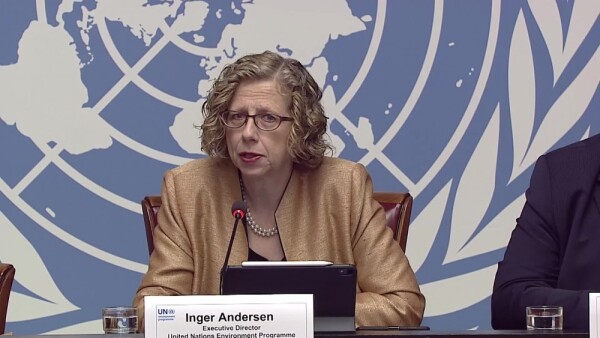
Taking up that message, Inger Andersen, UNEP Executive Director, blamed “climate procrastination” by Governments. “We are looking at a 7.6 per cent reduction every year,” she said. “Is that possible? Absolutely. Will it take political will? Yes. Will we need to have the private sector lean in? Yes. But the science tells us that we can do this.”
A 1.5C increase will mean that “75 per cent of the coral reefs will die”, Mrs. Andersen added. “At 2C practically all coral reefs disappear. We understand that insects that we need for pollination to have our food production will be significantly impacted and we are likely to lose massive habitats and therefore insects at the higher level.”
The challenge of tackling this is a daunting one, however, not least because of an increase in carbon dioxide (CO2) levels, which “had basically been stable for a few of years”, Mr. Christensen said.
Data from the UN World Meteorological Organization shows that since 1990, greenhouse gases have caused a 43 per cent increase in so-called radiative forcing - the warming effect on the climate.
Of these gases, CO2 accounts for about 80 per cent.
“We hoped that that indicated a stabilization,” he explained. “But in 2017 and 2018 - we don’t have the ‘19 numbers yet - emissions have been going up and CO2 emissions have been going up the last year by two per cent, so that’s actually above the average of the last 10 years.”
According to the yearly UNEP report, the increased CO2 emissions are linked to an improved economic performance in nations that are hugely reliant on energy produced by fossil fuels, compared with richer nations belonging to the Organisation for Economic Co-operation and Development (OECD).
“It’s coming because economic growth especially in developing countries is really high,” Mr. Christensen said. “While the OECD countries don’t really add to the CO2, they don’t really come down a lot either. But the main growth is in developing countries due to economic growth and still relatively high energy and carbon intensity in their energy systems.”
Confirming the likely impact of increased emissions on average global temperature rise since the industrial era, Petteri Taalas, WMO Secretary-General said that the world was “moving towards three to five degrees (Celsius) warming by the end of this century, instead of 1.5 to two, which was the Paris (Agreement of 2015)…target.”
For many communities, the issue is not so much temperature increases as more extreme weather events, Professor Taalas insisted. “The main impact so far and by the end of this century is coming from the changes in rainfall patterns,” he said. “We have started seeing already some of the regions to become more dry, especially Africa and some parts of Asia and some parts of the Americas and that’s having an even bigger impact than the temperature changes.”
In December 2020, countries are expected to significantly step up their climate commitments at the UN Climate Conference - COP26 - due to be held in Glasgow.
Hinting at the potential for progress offered by the fact that the cost of renewable energy technology is coming down all the time, making it attractive to the private sector, Mr. Christensen warned that many countries still needed to do much more.
“Most of the ones that committed to new plans next year and to zero carbon emissions are not in the G20; a few of them are, but not a lot. And then we look in detail at G20 countries this year and also I have to say that a lot of the plans that have been discussed about have really not been acted on yet.”
- Exterior shot, Palais des Nations flag alley.
- Wide shot, journalists, podium with speakers, Press Room III, Palais des Nations.
- SOUNDBITE (English) — John Christensen, Director, UNEP-Danish Technology Institute Partnership: “If you look at the global emissions, they are still going up. We had a little hope a couple of years ago that the CO2 part of the emissions had basically been stable for a few of years and we hoped that that indicated a stablization. But in 2017 and 2018 - we don’t have the ‘19 numbers yet - emissions have been going up and CO2 emissions have been going up the last year by two per cent, so that’s actually above the average of the last 10 years.”
- Wide shot, journalists, seated, projector screen, Press Room III, Palais des Nations.
- SOUNDBITE (English) — John Christensen, Director, UNEP-Danish Technology Institute Partnership: “It’s coming because economic growth especially in developing countries is really high and while the OECD countries don’t really add to the CO2, they don’t really come down a lot either. But the main growth is in developing countries due to economic growth and still relatively high energy and carbon intensity in their energy systems.”
- Medium shot, journalist wearing conference listening aid, hand on chin, looking right, Press Room III, Palais des Nations.
- SOUNDBITE (English) — Petteri Taalas, WMO Secretary-General: “We are moving towards three to five degrees (Celsius) warming by the end of this century instead of 1.5 to two, which was the Paris…target.”
- Medium shot, journalists, seated and all with coffee cups, Press Room III, Palais des Nations.
- SOUNDBITE (English) — Inger Andersen, Executive Director, United Nations Environment Programme (UNEP): “We understand that at 1.5 degrees (Celsius), 75 per cent of the coral reefs will die, at two degrees practically all coral reefs disappear. We understand that insects that we need for pollination to have our food production will be significantly impacted and we are likely to lose massive habitats and therefore insects at the higher level.”
- Wide shot, journalists, rear shot, podium with speakers, Press Room III, Palais des Nations.
- SOUNDBITE (English) — Petteri Taalas, WMO Secretary-General: “The main impact so far and by the end of this century is coming from the changes in rainfall patterns; and we have started seeing already some of the regions to become more dry, especially Africa and some parts of Asia and some parts of the Americas and that’s having an even bigger impact than the temperature changes.”
- Close-up, podium speakers in profile, Press Room III, Palais des Nations.
- SOUNDBITE (English) — John Christensen, Director, UNEP-Danish Technology Institute Partnership: “If we are looking at the two degree (Celsius) target of just around two degrees, we have a gap of 12 to 15 gigatonnes, and if you’re looking at the 1.5 degree which is really the desirable one, we have a gap of around 30 gigatonnes. And 30 gigatonnes is more than half of what we emit now, which is why we need to come down by 55 per cent in 10 years.”
- Close-up, Emissions Gap Report publication, podium speakers forming backdrop, Press Room III, Palais des Nations.
- SOUNDBITE (English) — Inger Andersen, Executive Director, United Nations Environment Programme (UNEP): “Now, because of climate procrastination which we have essentially had during these 10 years, we are looking at a 7.6 per cent reduction every year. Is that possible? Absolutely. Will it take political will? Yes. Will we need to have the private sector lean in? Yes. But the science tells us that we can do this.”
- Medium shot, video camera operator, Press Room III, Palais des Nations.
- SOUNDBITE (English) — John Christensen, Director, UNEP-Danish Technology Institute Partnership: “And most of the ones that committed to new plans next year and to zero carbon emissions are not in the G20; a few of them are, but not a lot. And then we look in detail at G20 countries this year and also I have to say that a lot of the plans that have been discussed about have really not been acted on yet.”
- Close-up, hands typing on laptops, profile, Press Room III, Palais des Nations.
- Wide shot, podium with speakers, Press Room III, Palais des Nations.
- Wide shot, journalists, seated, video camera operator, Press Room III, Palais des Nations.
- Close-up, journalist looking up, Press Room III, Palais des Nations.
- Wide shot, podium with speakers, Press Room III, Palais des Nations.
- Medium shot, journalists, onlookers, Press Room III, Palais des Nations.
Similar Stories

1
1
1
Edited News | OHCHR , UNOG
UN Human Rights on Tuesday called on Egypt to end the persecution, harassment and intimidation of independent journalists and media outlets, and to respect press freedom.

1
1
2
Edited News | UNICEF
Drones and drought are "closing in" on Sudan, the UN Children's Fund, UNICEF, said on Tuesday, describing unprecedented attacks on the country's infrastructure including by drones travelling up to 1,500 kilometres before hitting their target.
"It is an assault unlike anything Sudan has seen before. In the last week of October, not a single day passed without a drone strike on a power station in Sudan. Up to 15 were hit in the month of October,” said agency spokesperson James Elder.
1
1
1
Edited News | IOM , UNHCR
Aid teams working to help millions of people uprooted by the ongoing war in Sudan appealed on Friday for more international assistance amid desperate funding shortages, empty warehouses and overwhelming needs.

1
1
1
Edited News | UNICEF
Ukraine has sustained almost 2,000 attacks on education since the full-scale Russian invasion in 2022, with some 270 this year alone, the UN Children’s Fund (UNICEF) said on Tuesday.
1
1
1
Edited News | UNHCR
More than 280,000 people have now been displaced by fighting in Yemen and many vulnerable people are unable to access lifesaving relief because it is too dangerous to do so, the UN refugee agency (UNHCR) said on Friday.
1
1
1
Edited News | UN
Tour guides at UN Geneva turned heads at the Palace of Nations on Thursday as they unveiled stylish new uniforms, designed in partnership with leading Italian sustainable fashion designers and manufacturers.
1
1
1
Edited News | OCHA , UNICEF , WFP
Aid agencies warned on Friday of the fast-developing humanitarian emergency inside Taiz City in Yemen, which has been encircled by de facto Houthi forces fighting government troops along the country’s west coast.
2
17
1
2
Edited News , Press Conferences , Images | OCHA , WMO
Two UN agencies teamed up on Wednesday to issue an appeal for immediate assistance to help communities already being impacted by the strongest El Niño on record.
3
16
2
2
Edited News , B-roll , Conferences , Images | UNITED NATIONS , UNOG
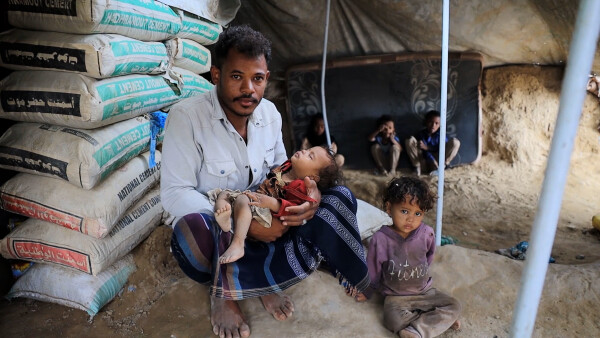
Sixth Consultative Meeting on Enhancing Coordination of Peace Initiatives and Efforts for Sudan
1
1
1
Edited News | UNICEF , WHO , UNHCR
Yemen war continues to force families from homes amid hunger and disease
More than 250,000 people have now fled renewed fighting in Yemen, the UN said on Tuesday, citing particular concern for those sheltering in the southwestern city of Taiz and the wider governorate, where access is “essentially blocked”.
1
1
1
Edited News | UNICEF
A little over one year since a ceasefire agreement was announced between Hamas fighters and Israel, more than 340 children have been reported killed and hundreds more injured, the UN Children’s Fund, UNICEF, said on Friday.
1
1
1
Edited News | UNICEF , IFRC
Six weeks after Nepal’s deadly flooding disaster, communities are still struggling to rebuild their lives, but they will need sustained help as global warming increases the risk of another Himalayan catastrophe, the UN Children’s Fund (UNICEF) said on Friday.