

The United Nations Office at Geneva
Multimedia Newsroom
PRESS BRIEFING BY THE UNITED NATIONS INFORMATION SERVICE
Alessandra Vellucci, Director of the United Nations Information Service (UNIS) in Geneva, chaired the virtual briefing, attended by the spokespersons and representatives of the United Nations Refugee Agency and the World Health Organization.
Pakistan issues smartcards to registered Afghan refugees
Babar Baloch, for the United Nations Refugee Agency (UNHCR), said that UNHCR welcomed the conclusion of the Government of Pakistan’s country-wide campaign to verify and update the data of some 1.4 million registered Afghan refugees and to issue them with smart identity cards. The data of 1.25 million Afghan refugees had been updated as a result of the campaign, among them 200,000 children under the age of 5. More than 700,000 new smart identity cards had been issued, and the remaining cards would be printed and distributed in early 2022.
The cards, which would be valid until 30 June 2023, contained biometric data and would give Afghan refugees faster and safer access to health and education facilities and financial services. The campaign had also provided an opportunity to flag any specific protection needs and vulnerabilities. More detailed information about the refugees’ socioeconomic situation would allow for better tailored assistance in Pakistan and support in case they decided to return home.
The full briefing note is available here.
Update on the Omicron variant of coronavirus disease (COVID-19)
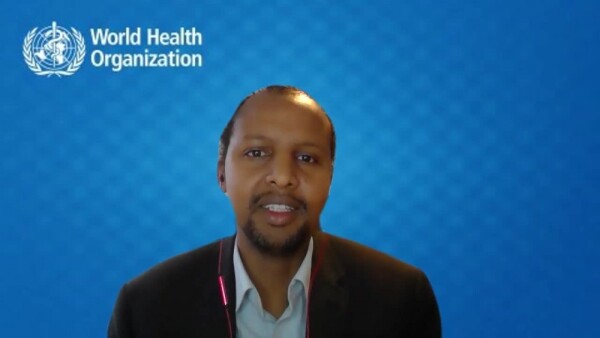
Dr. Abdi Mahamud, Incident Manager, COVID-19 Incident Management Support Team, World Health Organization(WHO), said that as of 29 December 2021, some 128 countries had reported cases of the Omicron variant. In South Africa, which had seen a sharp increase in cases then a relatively rapid drop-off, hospitalization and death rates had remained low. However, that situation should not automatically be extrapolated to other countries. It would be worth looking at the situation in London, where hospitalizations since the onset of the Omicron variant were not much lower than they had been in the same period in 2020 when the population had been largely unvaccinated. While the latest studies all pointed to the fact that the Omicron variant affected the upper respiratory system rather than the lungs, which was good news, high-risk individuals and the unvaccinated could still get gravely ill from that variant. WHO requested the media’s help in tracking progress on achieving worldwide vaccination coverage of 70 per cent.
Replying to questions from journalists, Dr. Mahamud said that the year-end holidays had disrupted data flows, but it was clear that the Omicron variant could overtake other strains in a matter of weeks, especially in areas with a large number of susceptible people, primarily people who were unvaccinated. In Denmark, for example, it had taken two weeks for case numbers to double with the Alpha variant whereas, with the Omicron variant, it had taken two days. The surge was fluid but could conceivably hit Eastern Europe next. The world had never seen such a transmissible virus, so what would have the biggest impact was behaviour. Places such as London and New York, where restrictions on social interactions were in place, could see flatter, longer curves than what had been seen in South Africa.
WHO was very satisfied with how States and scientists were sharing data with it. The Strategic Advisory Group of Experts (SAGE) on Immunization would be meeting on 19 January to review data, including on the timing of boosters, the mixing of vaccines and the composition of future vaccines. As new variants were more likely to develop in overpopulated areas where people had yet to be vaccinated, it was in the global interest to reach the target of 70 per cent vaccination coverage rather than to give boosters.
Thus far, the Omicron variant had mostly spread to countries that used the best-known vaccines, but there was no indication that other vaccines, such as Sinovac and Sinopharm, were not effective against the variant. That was because T cells were activated regardless of what virus entered the body. He did not have a breakdown of hospitalizations by variant. However, whether a variant supplanted another was a matter of virus fitness. His intuition was that Omicron would replace Delta, but that Delta could resurge owing to portions of the population remaining susceptible. Hence the importance of vaccination. Moreover, even in countries with good vaccination rates, how high coverage was among vulnerable categories would have a bigger impact on the trajectory of the pandemic.
Also answering questions, Dr. Mahamud said that most people cleared the virus within 5 to 7 days of the onset of symptoms, depending on their immune health; however, WHO still recommended 14-day quarantine. States had to make decisions about the duration of quarantine based on their individual situations. It made sense to keep case numbers as low as possible in places where they were low to begin with, but in places with runaway cases, there were competing interests, including keeping the countries running, that might justify shorter quarantines.
It was possible to be infected by both influenza and COVID-19. However, the two were separate viruses that used different receptors in order to attack the body; therefore, there was little risk of them combining into a new virus. WHO had been monitoring the B.1.640 variant since November 2021. Though there had been a slight increase in adverse pregnancy outcomes, they were still within normal range, and further data was needed to determine whether there was a greater risk of miscarriage linked with COVID-19.
Also in response to journalists, Tarik Jašarević, for the World Health Organization (WHO), recalled that the status of all the products submitted for inclusion on the WHO emergency use listing was available online.
Alessandra Vellucci, for the United Nations Information Service (UNIS), recalling the Secretary- General’s new year message, said that all the tests, including unequal distribution of COVID-19 vaccines, were tests that humankind could pass if it committed to making 2022 a year of recovery for everyone and that moments of great difficulty were also moments of great opportunity to come together in solidarity and to unite behind solutions that could benefit all people.
Similar Stories

1
1
1
Press Conferences | UNEP , ITU , UNICEF , UNHCR , OHCHR , IOM , WHO , UNECE
UNEP: Update on the first Global Framework on Chemicals Conference, ITU: 2026 Plenipotentiary Conference in Doha, UNICEF: Drones and drought worsen the crisis for children in Sudan, UNHCR: Nigerians flee violence, OHCHR attacks against press freedom in Egypt, IOM Ebola prevention and surveillance, WHO Ebola prevention and surveillance, UNECE UN Water Conference
1
1
1
Press Conferences | WMO
Speakers:
- Celeste Saulo, WMO Secretary-General
- John Kennedy, WMO Head of Climate Information
1
1
1
Press Conferences | UNHCR , IOM , UNICEF , WHO
UNHCR / IOM: Millions at risk of losing emergency shelter as funding runs out; UNHCR: warns of severe climate risks facing displaced people ahead of COP31, UNICEF: children in Ukraine face major water supply disruptions amid attacks on energy infrastructure; WHO: together for science and health.
1
1
1
Press Conferences | ILO , ITU , UNFPA , UNICEF , WHO
UNICEF: Education Cannot Wait (ECW) High-Level Replenishment Conference - mobilising funding for education for children affected by crises; Children in Ukraine have two-thirds of school hours disrupted by daily air-raid alarms. UNFPA: Yemen: conditions for women and girls in the besieged city of Taizz and in IDP camps; the status of maternal health facilities/services in Taizz City and in other conflict-affected areas. ILO: “Women in Business and Management report: Scaling Success". ITU: Facts and Figures 2026 report on global digital connectivity. WMO and International Ski and Snowboard Federation new guide on weather and climate services for ski resorts; WMO State of Climate Update at COP31
1
1
1
Press Conferences | OCHA , UN , UNHCR
UN Joint Inspection Unit: JIU at 60 - Who Holds the UN System Accountable? From Recommendations to Results – How Independent System-wide Oversight Contributes to Change; UNHCR: UNHCR winter appeal: 9m people urgently need winter aid as resources dwindle and temperatures slide; Refugees in Yemen trapped between conflict, displacement and dangerous journeys
1
1
1
Press Conferences | WMO , UNHCR , WHO , ILO
WMO: Greenhouse Gas Bulletin; UNHCR: As attacks intensify UNHCR urges support for war ravaged Ukrainians; WHO: Clinical trials in DRC: vaccines and beyond; ILO: New global and regional estimates on domestic work, informality and working conditions
1
1
1
Press Conferences | UN WOMEN , WFP , WHO
UN WOMEN: Sudan Women and girls one year after the fall of El Fasher; increasing drone attacks across the country; WFP: DRC - Ebola spreads to eighth DRC province as WFP delivers food, builds treatment centres and keeps supplies moving; WHO - Update on Ebola (Bundibugyo Virus Disease)
1
12
1
1
Press Conferences , Images | UNOG
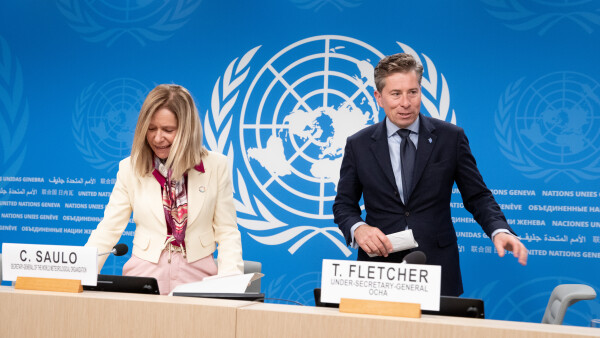
Closing Press Conference following the Sixth Consultative Meeting on Enhancing Coordination of Peace Initiatives and Efforts in Sudan
2
17
1
2
Edited News , Press Conferences , Images | OCHA , WMO
Two UN agencies teamed up on Wednesday to issue an appeal for immediate assistance to help communities already being impacted by the strongest El Niño on record.
1
1
1
Press Conferences | CITES
Wildlife trade and conservation policy discussions at the 81st meeting of the CITES Standing Committee (SC81)
1
1
1
Press Conferences | UNHCR , UNCTAD , WMO , OCHA , UNICEF , WHO
UNHCR Hungary’s 1956 Refugee Crisis: 70 Years On, UNCTAD World Investment Forum 2026, Doha, WMO Greenhouse Gas Bulletin and Climate Update for COP31, OCHA Afghanistan: Malnutrition, Girls’ Education and Recovery, UNICEF Yemen: Child Malnutrition and Unsafe Water in Taiz, WHO Inequalities in Noncommunicable Diseases and Risk Factors
1
1
1
Press Conferences | UNHCR
End of UNHCR's 77th Annual Executive Committee (ExCom) meeting week